Washington Township · Burlington County, NJ
Roofing Contractors in Washington Township, NJ
Roof repair, replacement and inspection for remote Pinelands properties in Washington Township, Burlington County.
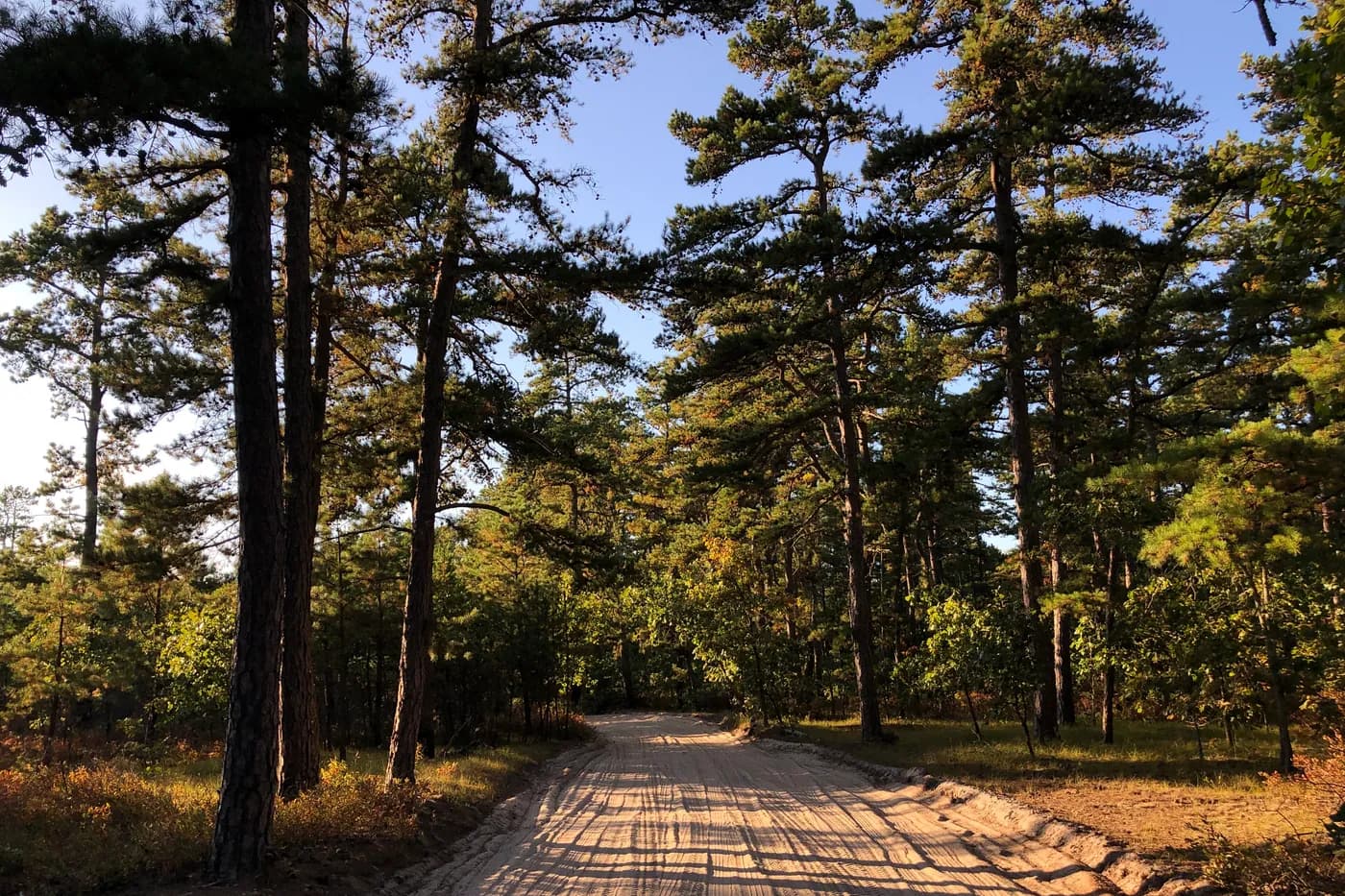
Photo: Famartin / CC BY-SA 4.0, via Wikimedia Commons
Woodland setting
Properties and roofs in Washington Township
Washington Township is the largest municipality in Burlington County by area — over a hundred square miles — and the smallest by population, with fewer than seven hundred residents. All of it lies within the state-designated Pinelands Area, and most of it is forest, river and bog rather than settlement.
Houses here are genuinely remote, clustered in small riverside settlements such as Green Bank, Lower Bank and Pleasant Mills or standing alone along the roads. Roofing a property in this setting is as much about access and infrequency as it is about the roof itself.
- Where it is
- The township spans the southern Pinelands, with the Mullica River forming most of its south-western border with Atlantic County and the Wading and Oswego Rivers forming its eastern boundary with Bass River Township. Batsto, Green Bank, Lower Bank, Pleasant Mills, Crowleytown, Bulltown, Jenkins, Quaker Bridge, Tylertown, Bear Swamp Hill and Friendship Bogs are among its localities. It was incorporated in 1802.
- What is built here
- Housing is sparse and varied: older homes in the riverside settlements, houses on large forested parcels, and properties along the rivers. Outbuildings and workshops are common and frequently metal-roofed. With a township this size and this thinly populated, roofs are looked at rarely, and problems tend to be well advanced by the time anyone notices them.
Tree cover and organic debris
Forest on every side means continuous needle and leaf fall. On a property that is visited rarely and inspected less often, debris accumulates in valleys and gutters for long periods, holding moisture against the covering and blocking drainage entirely rather than partially.
Inspection
Look at the roof before it tells you
Properties here are often set back and seldom seen up close, so problems tend to be older by the time they are found. An annual look, plus one after any storm that brought branches down, catches most of it early.
What an inspection coversRoof repair
Typical repairs in Washington Township
- Drainage blocked for extended periods rather than briefly
- Fascia and roof edge damage that has progressed unnoticed
- Moss well established on permanently shaded slopes
- Limb strike damage discovered long after the storm
- Deteriorated metal outbuilding roofs needing re-fastening
Replacement
When the covering has run its course
Replacement means taking the roof down to the deck, repairing sheathing, and rebuilding the water barriers, flashing and ventilation. On long or remote drives, where the container and deliveries go needs agreeing first.
Roof replacement step by stepVentilation
Letting the attic dry
Roofs that stay damp outside need attics that can dry inside. Soffit intake blocked by insulation, and bathroom fans venting into the attic, are the usual culprits behind condensation mistaken for leaks.
Ventilation and attic moistureGutters and drainage
Keeping water moving
With drainage blocked for months at a time rather than days, the consequences reach further than a suburban gutter overflow: water backing onto roof edges and fascia over whole seasons rather than single storms. Along the rivers, where ground is already wet, getting the discharge properly away from the building matters as well.
Storm preparation
Weather here, and getting ready for it
- Genuine remoteness, affecting access, material delivery and waste removal
- Long intervals between anyone inspecting a roof closely
- Continuous pine needle fall in a fully forested setting
- Riverside humidity keeping roofs damp for extended periods
- The entire township within the state-designated Pinelands Area
- Older settlement housing with layered coverings and unknown deck condition
Services
Roofing services in Washington Township
Roof Inspection
A documented assessment of what a roof is actually doing — before committing to any work.
Gutter Services
Gutters, downspouts and roof-edge drainage — the part of the roof system that moves water away.
Roof Repair
Leak tracing and targeted repairs for shingle, flat and tile roofs across Burlington County.
Metal Roofing
Standing seam and metal panel roofing, plus repairs to existing metal roofs and accents.
Questions
Roofing questions from Washington Township
Is this the Washington Township near Sewell, or the one in Morris County?
Neither. This page covers Washington Township in Burlington County — the very large, very thinly populated Pinelands township containing Green Bank, Lower Bank and Batsto. New Jersey has five municipalities called Washington Township, and they are entirely separate places.
Will you travel out to a property this remote?
Yes. It does mean access is worth discussing at the outset — how material reaches the house, where a debris container can stand, and whether the drive will carry a loaded vehicle. Those are practical questions that shape how the job runs rather than obstacles to it.
My roof has not been looked at in years. What is likely to be found?
Most commonly, drainage that has been blocked long enough to damage the roof edge and fascia, debris held in valleys, moss on the shaded slopes, and vent boot collars that have split without anyone noticing. None of that is dramatic individually, but together they account for most of what goes wrong on a rarely inspected roof.
Does the Pinelands designation apply to my property here?
All of Washington Township lies within the state-designated Pinelands Area, so yes. Like-for-like repair or replacement of an existing roof is a different matter from altering a structure — for anything beyond the former it is worth checking with the township and the Pinelands Commission first.
Nearby
Service areas near Washington Township
- Bass River Township
- Woodland Township
- Tabernacle Township
- Shamong Township
- Southampton Township
- All 40 municipalities
Further reading
7 min read
What to Know About Roofing on Wooded Properties
A wooded lot does not just mean more leaves in the gutter. It changes how the roof ages, how it is maintained and how the work gets done.
6 min read
What Tree Debris Can Do to an Asphalt Shingle Roof
Debris on a roof is treated as untidiness. It is closer to a slow chemical and mechanical attack on the covering underneath it.
7 min read
Roof Leak Warning Signs Homeowners Miss
By the time water drips from a ceiling, it has usually been getting in for months. The earlier signals are quieter, and most of them are not wet.
Get your Washington Township roof looked at
Tell us about the roof. The municipality page you are on is recorded for context only — the property address you give is what we use.