Flat and Low-Slope Roofing in Burlington County, New Jersey
A flat roof is never truly flat. It is a low-slope roof, built to move water deliberately across a shallow fall to a defined outlet, and everything about how it is constructed follows from the fact that water leaves slowly rather than quickly.
Shingles work because water runs off them fast enough that it never gets under a lap. Below a certain pitch that stops being true, and a lapped covering becomes the wrong tool — which is why a low-slope roof needs a continuous membrane with sealed seams instead.
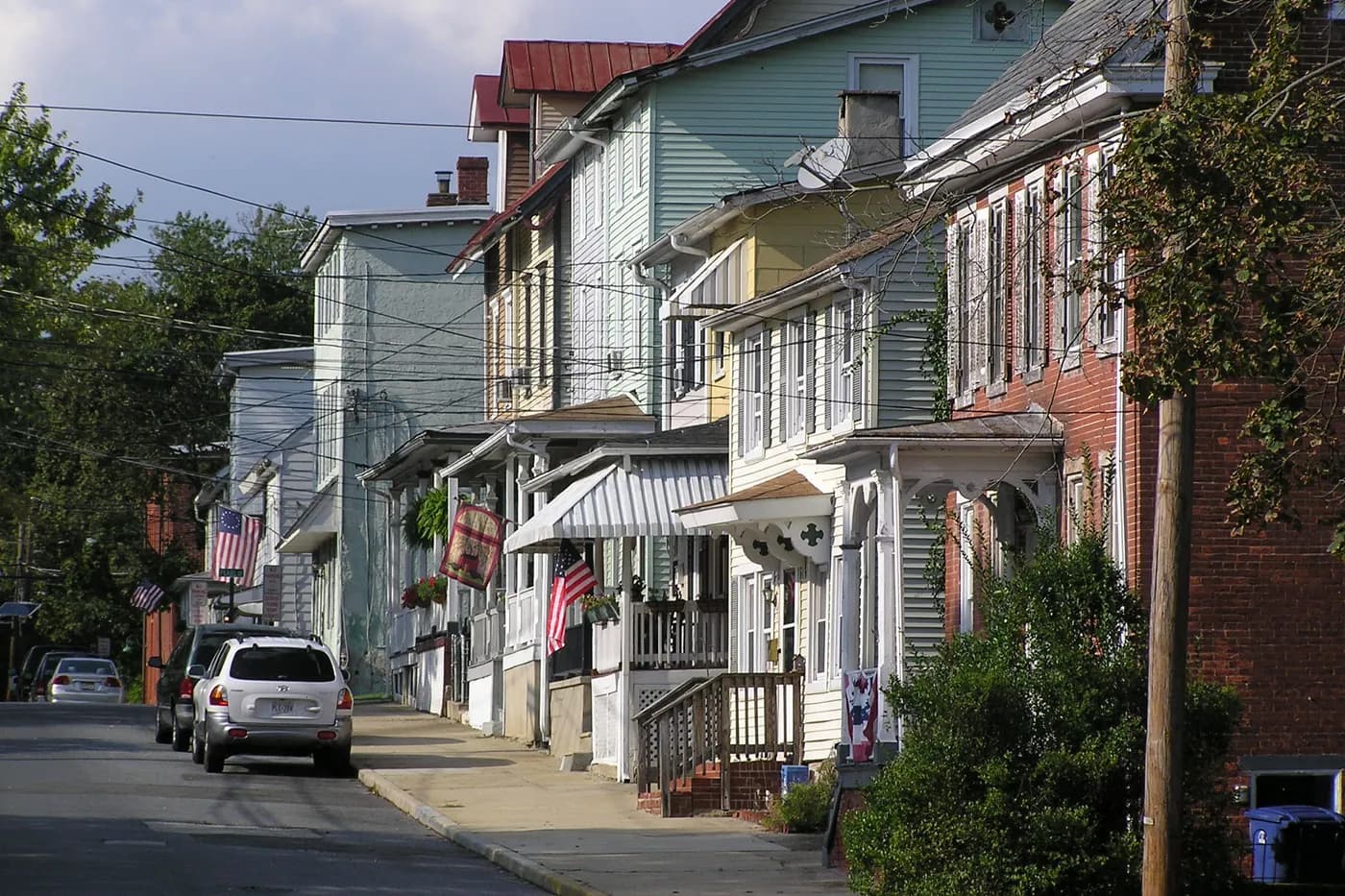
In Burlington County, low-slope roofing shows up in two quite different places: on residential porches, additions, dormers and garage roofs — very common on the older housing in the river towns and on post-war additions throughout the county — and across commercial buildings.
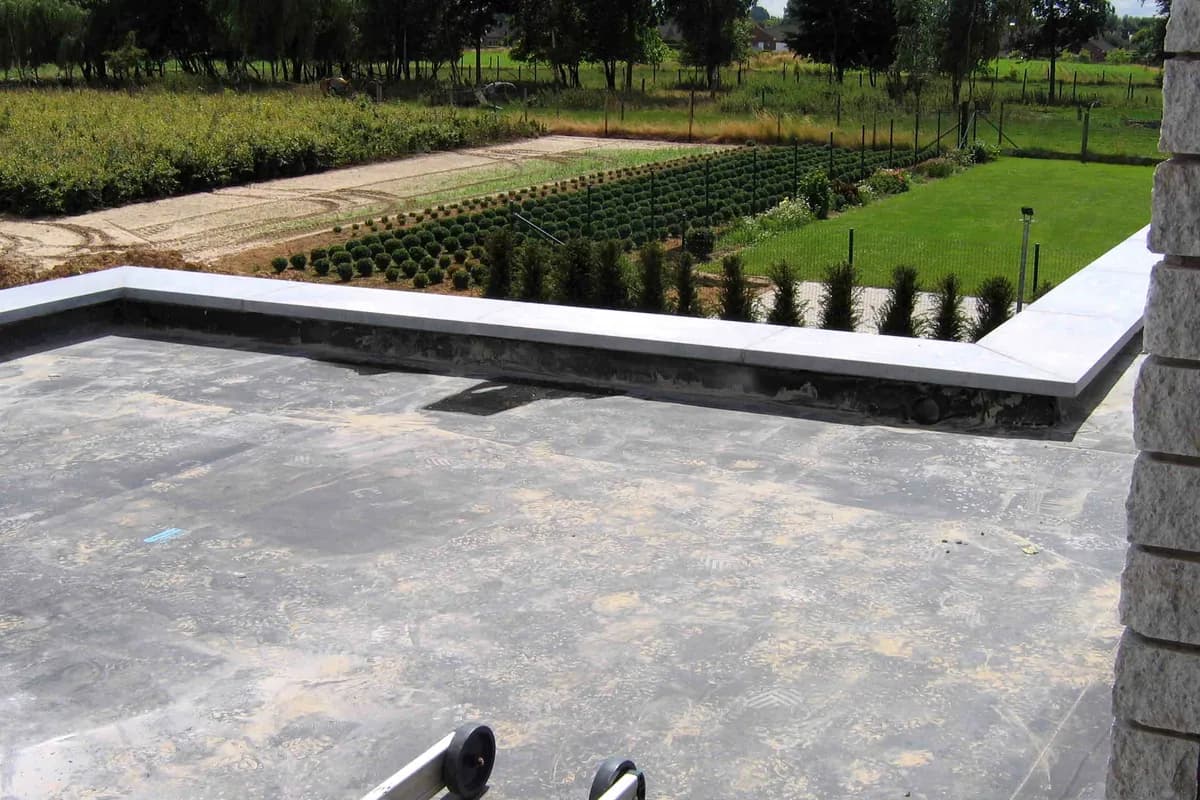
Photo: KVDP / Public domain, via Wikimedia Commons
Signs
When flat roofing is the right call
- Water pooling and staying put well after the rain stops
- Seams lifting, opening or showing a visible ridge
- Blisters or bubbles in the membrane surface
- Splits or cracks, typically at a change in direction
- Flashing pulling away where the roof meets a wall or parapet
- Interior staining below a porch, addition or dormer roof
Why low slope is a different trade
On a steep roof, each shingle overlaps the one below and gravity does the sealing. On a low-slope roof, water may sit for hours, so the covering has to be genuinely watertight rather than water-shedding. Every seam has to be welded, taped or adhered into a continuous surface, and every edge has to be terminated so that standing water cannot get behind it.
This is why shingling a porch roof that is too shallow always ends the same way. It may take two winters, but water will eventually work back under the laps, and no amount of sealant along the front edge changes that.
Drainage and ponding
The most common failure on a low-slope roof is not the membrane. It is water that has nowhere to go: a blocked scupper, a drain strainer packed with leaves, a downspout that was disconnected during other work, or a fall that was never quite enough to begin with.
Water immediately after rain is normal. Water still there two days later is a problem, and it is worth acting on before it becomes a membrane problem. On a residential porch or addition, this is often simply a matter of clearing the outlet and correcting where the water is directed.
- Drains, strainers and the lines below them kept clear
- Scuppers and edge outlets that discharge freely
- Tapered insulation or crickets creating fall toward the outlet
- Structural deflection creating a low point away from any drain
Seams, terminations and penetrations
Membrane systems rarely fail in the middle of a sheet. They fail where sheets join, where the membrane turns up a wall or parapet and is terminated, and where something passes through it.
On residential low-slope roofs, the junction where a porch or addition roof meets the house wall is the classic failure point. It needs the membrane carried up the wall as base flashing and properly counter-flashed or tucked behind the cladding — not a bead of sealant along the top edge, which is what is usually found there.
Membrane options
TPO and EPDM are single-ply membranes: one continuous sheet, mechanically fastened or adhered, with seams heat-welded (TPO) or taped and adhered (EPDM). Both are well established, and both are common on residential low-slope work as well as commercial.
Modified bitumen is an asphalt-based sheet in one or more plies, and it remains common on smaller residential low-slope roofs. Built-up roofing — multiple plies with bitumen and a surfacing — is largely an older system now, but a great deal of it is still in service on the county's older buildings.
Materials
Materials and components
- TPO
- Single-ply thermoplastic membrane with heat-welded seams. Reflective white surface is common.
- EPDM
- Single-ply synthetic rubber membrane, seamed with tape and adhesive. Long service record.
- Modified bitumen
- Asphalt sheet membrane in one or more plies. Common on residential porches and small commercial roofs.
- Built-up roofing
- Multi-ply bitumen and surfacing. Mostly encountered as an existing system on older buildings.
Process
How the work is approached
- 01
Establish the slope and the drainage path
Where the water is supposed to go, and whether it can actually get there.
- 02
Inspect the whole perimeter
Seams, terminations, base flashing and every penetration, which is where failures cluster.
- 03
Check what is underneath
Whether the insulation and deck below the membrane are dry, which determines the real options.
- 04
Repair or replace on the evidence
Localised repair where the system is sound; replacement where the substrate is wet.
- 05
Detail the terminations properly
Base flashing carried up and terminated, not sealed along a top edge.
- 06
Confirm it drains
Check the finished roof actually sheds to the outlet as intended.
Questions
Flat Roofing: common questions
Why can't my porch roof just be shingled?
Below the minimum pitch for shingles, water moves too slowly to clear the laps and will eventually work back underneath them. It is not a question of sealing the edges better — the covering type is simply wrong for the slope, and a membrane system is the right answer.
Is standing water on a flat roof normal?
Immediately after rain, yes. Two days later, no. Persistent ponding keeps seams and terminations under constant pressure and is usually a sign that an outlet is blocked or the fall is inadequate — both of which are worth fixing before the membrane suffers for it.
Can a flat roof be repaired, or does it need replacing?
Localised damage on a system with a dry substrate is repairable. The deciding factor is whether the insulation beneath the membrane is wet: once it is saturated, patching or coating over it seals the water in and the problem continues underneath.
How long does a flat roof last?
It depends far more on drainage and detailing than on the membrane. A single-ply system that drains properly and has well-made terminations can give decades; the same membrane sitting under standing water at a badly terminated parapet will not.
What are the bubbles in my flat roof?
Blisters, usually caused by moisture or air trapped between layers expanding in the heat. Small, stable blisters are often left alone and monitored. Ones that are growing, or that have split, need opening up and repairing properly.
Related
Related services and reading
6 min read
Flat Roof Drainage Problems Explained
On a low-slope roof, almost every membrane problem is really a drainage problem that has been going on for a while.
6 min read
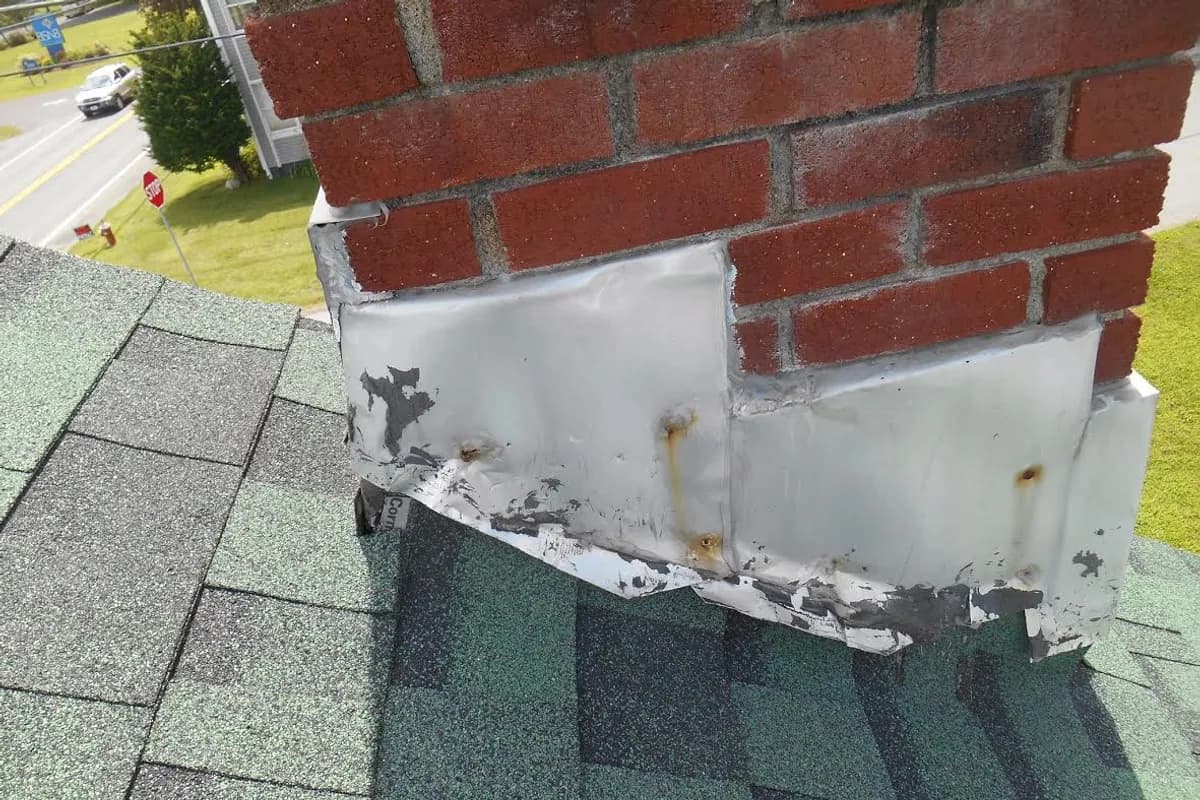
How Flashing Protects Roof Penetrations
A roof is a continuous surface interrupted by holes. Flashing is the craft of making those interruptions shed water.
6 min read
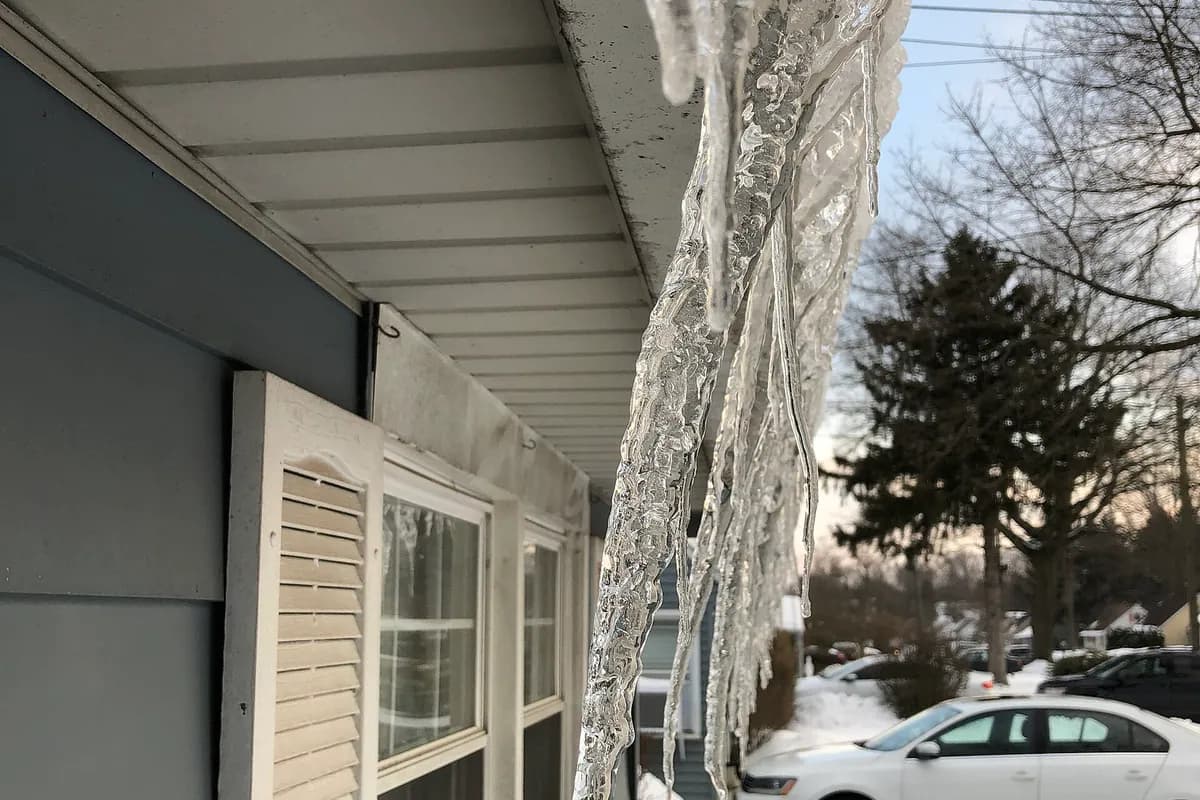
How Gutter Drainage Affects the Roof Edge
The dangerous overflow is not the one you can see from the garden. It is the one going backwards, onto the roof.
Ask about flat roofing
Tell us what is happening and we will get back to you about it. Fields marked * are required; everything else is optional.