Roof Replacement in Burlington County, New Jersey
Replacing a roof means removing the existing covering down to the deck and rebuilding the whole assembly: the decking, the water-barrier layers, the metal that manages every edge and joint, the field shingles, and the ventilation that lets the assembly dry. Done properly, the shingles are the least interesting part of the job.
Across Burlington County there is a large stock of roofs now reaching the end of a second covering. The post-war housing in Willingboro, Maple Shade and the river boroughs, the 1970s and 1980s subdivisions in Mount Laurel, Evesham and Lumberton, and the larger homes built through the 1990s in Medford and Moorestown have all moved through one replacement cycle already, and second-layer roofs raise their own questions about deck condition.
The value of a replacement is in what happens between tear-off and the first shingle: what the deck turns out to look like, how the eaves and valleys are protected, and whether the flashing is rebuilt or reused.
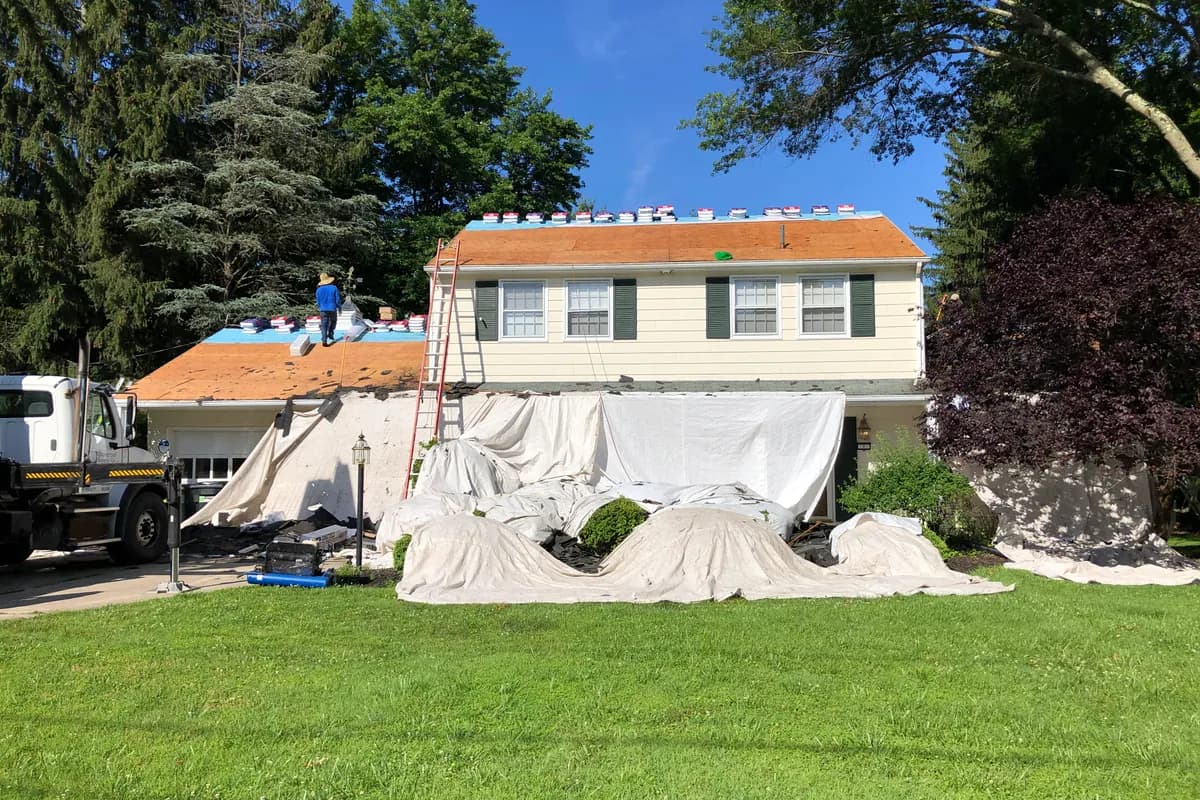
Photo: Famartin / CC BY-SA 4.0, via Wikimedia Commons
Signs
When roof replacement is the right call
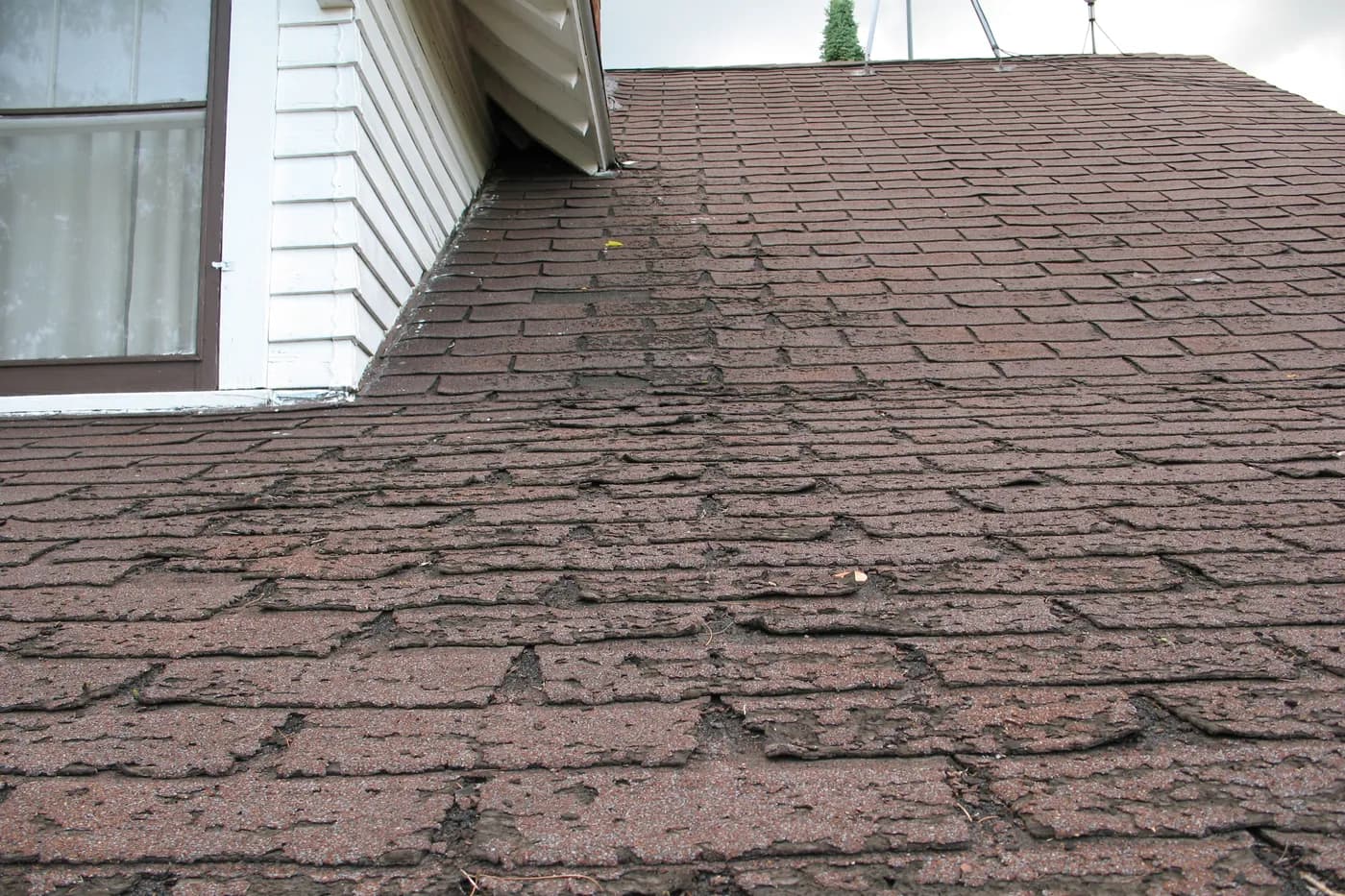
- Shingles that are curling, cupping or cracking across the whole roof, not in one patch
- Bare, shiny asphalt where the granule layer has worn away
- A roof that has already been repaired several times in different places
- Two or more layers of shingles on the deck
- A roof approaching or past the age typical for its material
- Sheathing that feels soft underfoot or sags visibly between rafters
Assessing whether the roof is genuinely finished
The first job is to decide honestly whether replacement is warranted. Age alone does not condemn a roof, and a well-ventilated shingle roof in good condition at twenty years may have life left while a poorly ventilated one at fifteen may not.
What matters is the pattern of deterioration. Local damage is a repair. General deterioration — granule loss across every slope, brittle shingles that crack when lifted, seals that have released widely, multiple leak points appearing in different places over a couple of seasons — is a roof that has reached the end of its service life.
Tear-off, and why it matters
Roofing over an existing layer is permitted in some circumstances and is cheaper on the day. It also hides the deck, adds weight, traps heat against the new shingles and makes the next replacement more expensive. Most importantly, it means nobody has seen the sheathing.
A full tear-off removes every existing layer down to bare deck. The nails come out, the debris goes into a covered container, and the structure underneath becomes visible for the first time in decades. That inspection is the single most useful thing a replacement provides.
Decking
With the deck exposed, damaged sheathing is identified and replaced. Plywood that has delaminated from repeated wetting, plank sheathing that has rotted at the joints, and areas around old chimneys and long-standing leaks are the usual candidates.
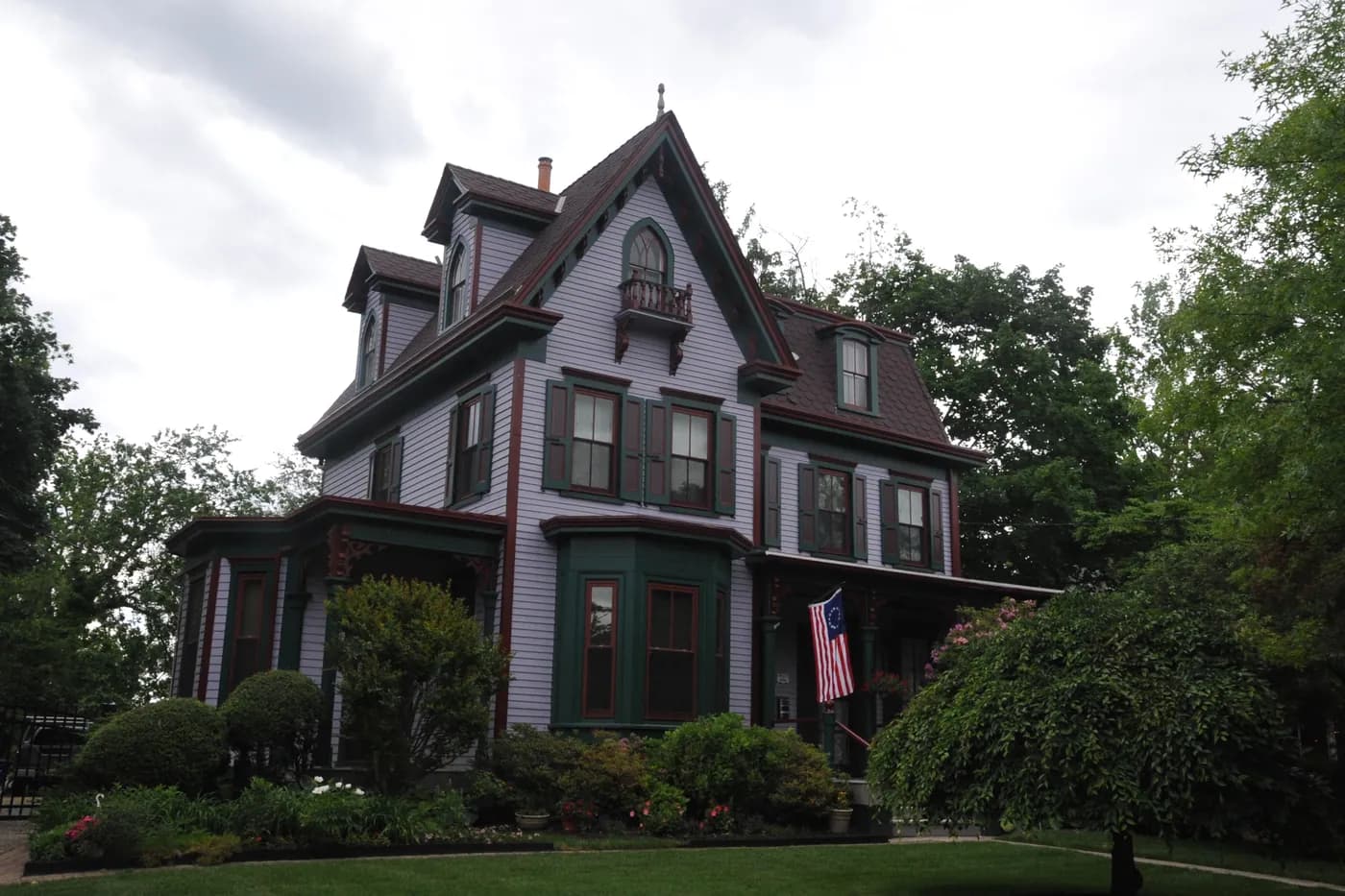
Older Burlington County houses — the 18th and 19th century stock in Burlington City, Mount Holly, Bordentown and Riverton in particular — often have plank sheathing with gaps between boards rather than a continuous plywood deck. That is not a fault, but it changes fastener choice and sometimes calls for overlay, and it is worth knowing about before the job rather than during it.
- Replacement of delaminated, rotted or split sheathing
- Re-nailing loose decking to the rafters
- Assessment of plank sheathing on older houses
- Identification of structural issues that are a carpenter's job, not a roofer's
Ice-and-water protection, underlayment and drip edge
A self-adhering ice-and-water membrane goes down first at the vulnerable areas: along the eaves, in the valleys, and around penetrations and walls. It seals around fasteners and gives a secondary barrier exactly where water is most likely to back up. In this climate, eave protection matters — freeze-and-thaw cycling through a South Jersey winter is milder than further north, but ice dams still form on poorly ventilated roofs.
The remaining field is covered in underlayment, and metal drip edge is installed at eaves and rakes. Drip edge is a small component that does a lot: it carries water off the deck edge into the gutter rather than behind it, and it protects the fascia from the run-off that would otherwise wick back underneath.
- Ice-and-water membrane at eaves, valleys, walls and penetrations
- Synthetic underlayment across the remaining field
- Drip edge at the eaves, under the underlayment at the rake
- Valley treatment appropriate to the roof geometry
Flashing: rebuilt, not reused
Existing flashing is frequently reused on a replacement because it is quicker and it does not show. It is also where the new roof will leak first, since the metal is typically the same age as the covering that has just been condemned.
Chimney flashing is the clearest case. A chimney needs a base, step flashing woven into each shingle course, counter-flashing let into the masonry, and on a wide chimney a cricket behind it to divert water around rather than letting it pile against the back face. Rebuilding that assembly is part of the job, not an extra.
Starter course, field shingles and ridge
The starter course at the eaves and rakes provides the adhesive bond for the first row of shingles and closes the joints in the course above. Getting it right is what stops the bottom edge of a roof from lifting in wind.
The field is then laid to the manufacturer's offset and fastening pattern — nail placement and count matter more than almost anything else for wind performance — and the job closes with hip and ridge cap over the ridge ventilation.
Ventilation
A roof assembly needs to breathe. Intake at the soffit and exhaust at the ridge let the attic air change, which carries away the moisture that rises from the living space and reduces the heat that cooks shingles from underneath in July.
The most common fault is exhaust without intake: a ridge vent installed over blocked or insulated-over soffits, which cannot draw. The second most common is mixing exhaust types on the same attic space, so one short-circuits the other. Replacement is the natural moment to correct both.
Cleanup and final review
A tear-off produces a great deal of debris and a very large number of nails. Ground protection during the work, a covered container, and magnetic sweeps of driveways, lawns and beds afterwards are part of doing the job properly — particularly on properties with children, animals or gravel drives.
A final walk of the property and a review of what was found during tear-off closes the job out, including anything discovered that falls outside roofing work.
Materials
Materials and components
- Architectural asphalt shingles
- What most Burlington County houses are re-roofed with today: two bonded layers, a shadowed profile, and higher wind ratings for open or riverfront lots.
- Three-tab asphalt shingles
- The flatter, lighter profile found on much of the county's post-war housing. Still made, though architectural shingles dominate replacement work.
- Synthetic underlayment
- The layer over the whole deck beneath the shingles. Lighter and more tear-resistant than traditional felt.
- Ice-and-water membrane
- Self-adhering barrier at eaves, valleys and penetrations. Seals around fasteners.
- Aluminium and galvanised flashing
- Step, apron, counter- and valley flashing, plus drip edge at eaves and rakes.
- Ridge vent and soffit intake
- The exhaust and intake halves of attic ventilation. Neither works without the other.
Process
How the work is approached
- 01
Condition assessment
Establish whether the roof is genuinely at end of life, and what the replacement needs to include.
- 02
Scope and written quotation
Materials, decking allowance, flashing scope, ventilation plan and what happens if hidden damage is found.
- 03
Property protection
Cover and protect landscaping, walls, windows and drives before anything comes off the roof.
- 04
Tear-off to bare deck
Remove every existing layer and all fasteners, and inspect the structure underneath.
- 05
Decking repair
Replace damaged sheathing and re-fasten anything loose.
- 06
Water barriers and metal
Ice-and-water membrane, underlayment, drip edge, valley treatment and rebuilt flashing.
- 07
Shingle installation
Starter course, field shingles to the specified pattern, then hip and ridge.
- 08
Ventilation
Confirm intake and exhaust work together as one system.
- 09
Cleanup and review
Debris removal, magnetic sweeps and a final walk of the property.
Questions
Roof Replacement: common questions
Should the old roof be torn off, or can the new one go over it?
Tear-off is the better answer in almost every case. Roofing over hides the deck, so nobody sees rot or delamination, adds weight, holds heat against the new shingles and makes the following replacement more expensive. The inspection of the bare deck is one of the main things a replacement is buying you.
How long does a roof replacement take?
A straightforward single-family roof is commonly a one- to two-day job once work starts, and a large or complex roof with many valleys, dormers and chimneys takes longer. Weather governs the schedule more than anything else. No specific duration is promised here because it depends entirely on the property.
What happens if bad decking is found after tear-off?
It gets replaced, and it should be priced before the job begins rather than discovered as a surprise. A written quotation should state what allowance is included and the rate for anything beyond it, so the number does not move without your agreement.
Does the flashing get replaced too?
It should be. Existing flashing is usually the same age as the covering being removed, and reusing it puts old metal under a new roof. Chimney flashing in particular is worth rebuilding as a complete assembly rather than resealing.
Why does ventilation come up during a roof replacement?
Because the roof, the attic and the ventilation are one system. Trapped heat and moisture shorten shingle life from underneath and cause problems in the attic that look like roof leaks. Replacement is the practical moment to fix intake and exhaust, since the roof is open anyway.
Will there be nails left in the garden?
There should not be. A tear-off releases thousands of fasteners, so ground protection during the work and magnetic sweeps of drives, lawns and beds afterwards are part of the job. It is worth asking specifically about this if the property has children, pets or a gravel drive.
Where this comes up
Roof Replacement around Burlington County
Related
Related services and reading
7 min read
When Is Roof Replacement Better Than Another Repair?
The honest answer usually turns on one distinction: whether the failure is in one place, or everywhere at once.
7 min read
Asphalt Shingle Roof Lifespan in New Jersey
The number on the warranty and the number of years a roof lasts are two different things, and they are not closely related.
7 min read
How Roof Ventilation Helps Control Moisture
Most attic ventilation faults are not missing vents. They are vents that cannot draw, because nothing is feeding them.
Ask about roof replacement
Tell us what is happening and we will get back to you about it. Fields marked * are required; everything else is optional.