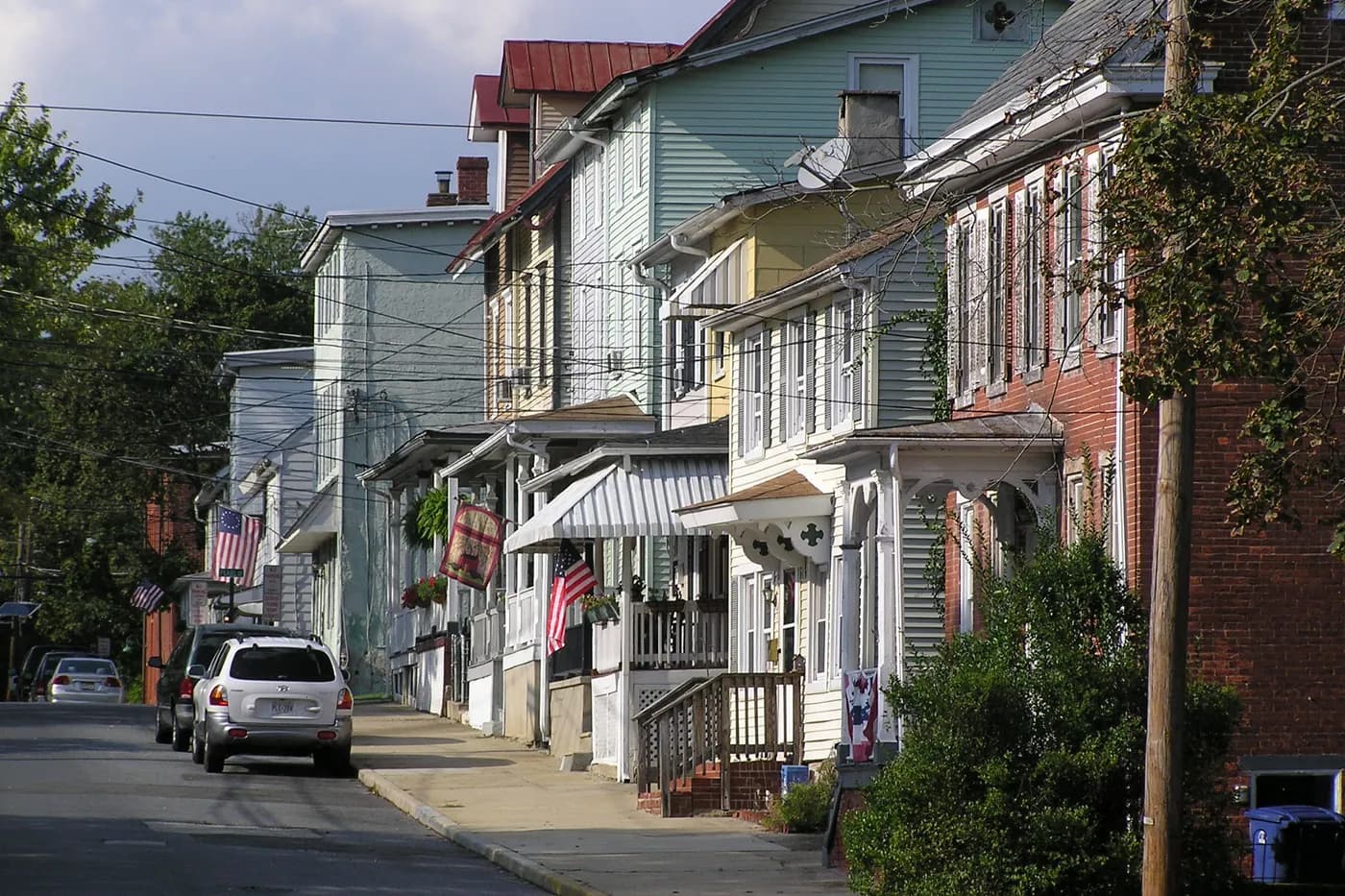
Mount Holly Township · Burlington County
Roofing Contractors in Mount Holly, NJ
Roof repair, replacement and inspection across Mount Holly, the county seat.
Photo: Apc106 / CC BY-SA 3.0, via Wikimedia Commons
A historic place
Mount Holly: the place and its buildings
Mount Holly has been the seat of Burlington County since 1796, and its downtown sits inside a 260-acre historic district full of eighteenth and nineteenth century buildings. It is named for the hill just north of the centre, which is partly covered with holly.
That concentration of very old building in a small township makes Mount Holly one of the more demanding places in the county to roof properly. Steep and irregular roof planes, masonry chimneys in quantity, party walls, parapets, and low-slope rear wings — often all on the same building.
Downtown and the surrounding streets hold dense historic building: attached and closely set town housing, commercial and mixed-use buildings, and civic structures, with steep pitches, dormers, parapets and multiple masonry chimneys. Low-slope rear additions and flat commercial roofs over ground-floor retail are extremely common. Away from the district there is later residential development of more conventional form.
Leaks and flashing
Where older roofs here let water in
- Standing water and blocked outlets on flat roofs over commercial premises
- Failed parapet terminations admitting water into the wall
- Chimney flashing failure on historic stacks
- Interior damage from drainage that has nowhere to overflow
- Ceiling staining in upper floors of mixed-use buildings
Services
Roofing services in Mount Holly
Commercial Roofing
Low-slope and membrane roofing for commercial, retail, industrial and institutional buildings.
Flat Roofing
Low-slope membrane roofing on additions, porches, dormers and commercial buildings.
Roof Repair
Leak tracing and targeted repairs for shingle, flat and tile roofs across Burlington County.
Roof Replacement
Full tear-off and rebuild of the roof system, from decking and underlayment through to ridge ventilation.
Roof replacement
Replacing a roof on an older building
On older housing a tear-off usually reveals more than one previous covering and often plank sheathing rather than plywood. A quotation should state its decking allowance, and chimney and wall flashing should be rebuilt rather than reused.
What a replacement includesExposure
Wind and weather
Inland and sheltered relative to the river towns, Mount Holly does not get the same sustained wind exposure. Its weather challenge is more about volume: heavy short-duration summer rainfall on complicated roof geometry with limited drainage capacity, and freeze-and-thaw cycling on very old coverings.
Drainage
Roof edges, gutters and where water goes
This is where much of the difficulty sits. Dense historic building means parapets, internal gutters, shared drainage and very little ground between structures. A blocked outlet on a flat rear roof has nowhere to overflow except into the building, which is a different order of problem from a gutter spilling onto a lawn. On mixed-use buildings, keeping the low-slope drainage genuinely clear is the single highest-value maintenance item.
Historic-property considerations
What changes the approach here
- A 260-acre historic district of eighteenth and nineteenth century building
- Mixed-use buildings combining steep front roofs with flat rear or main roofs
- Parapet and party wall terminations on attached properties
- Multiple masonry chimneys per building needing rebuilt flashing assemblies
- Restricted access on narrow downtown streets
- Commercial low-slope roofs over occupied retail and office space
Questions
Roofing questions from Mount Holly
Do you work on commercial and mixed-use buildings downtown?
Yes, and a large share of the roofing need in central Mount Holly is exactly that. Mixed-use buildings often combine a steep street-facing roof with a flat main or rear roof, and the flat portion — its drainage, its parapet terminations and its penetrations — is usually where the problems are.
Water is coming into an upper floor but I cannot see anything wrong on the roof. Why?
On a building with parapets, water frequently gets in at the termination where the membrane turns up the wall, then travels inside the wall a considerable distance before appearing. The roof surface can look entirely sound. The perimeter and the terminations are where that investigation needs to start.
My building is in the historic district. Does that restrict roofing work?
It principally affects what is visible from the street — materials, profiles and visible metalwork. The assembly beneath still has to be right. Anything visible is worth checking against local requirements before it is ordered rather than after it is installed.
The flat roof over my shop ponds after every rain. Is that urgent?
Water immediately after rain is normal; water still there two days later is not. Persistent ponding keeps seams and terminations under constant pressure and ages the membrane in that spot. It usually means a blocked outlet, structural deflection or inadequate fall — and on a building with no overflow route, that matters more than it would elsewhere.
Can roofing work be done without closing the premises?
Generally yes. Commercial work is normally sequenced so that each section opened is made watertight the same day, with access and staging planned around the operation of the building. On a narrow downtown street, where the container and the ladders go needs agreeing in advance.
Nearby
Service areas near Mount Holly
Further reading
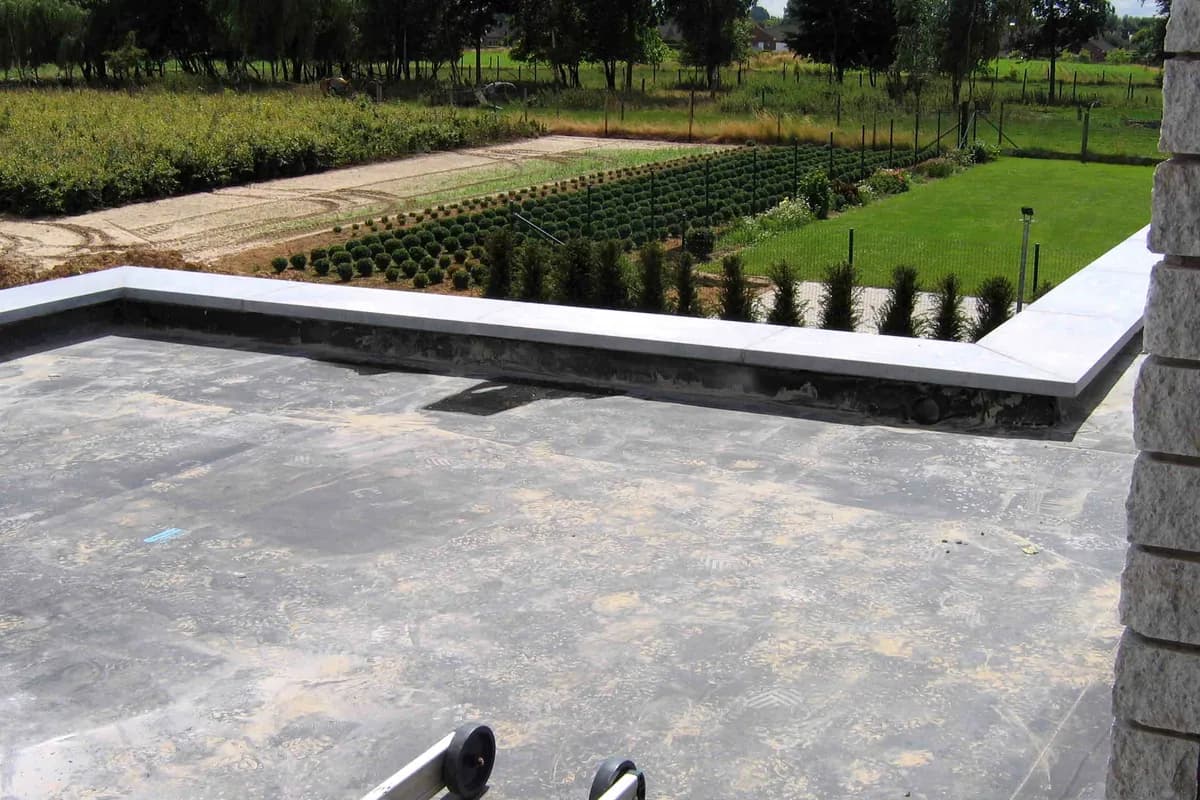
6 min read
Flat Roof Drainage Problems Explained
On a low-slope roof, almost every membrane problem is really a drainage problem that has been going on for a while.
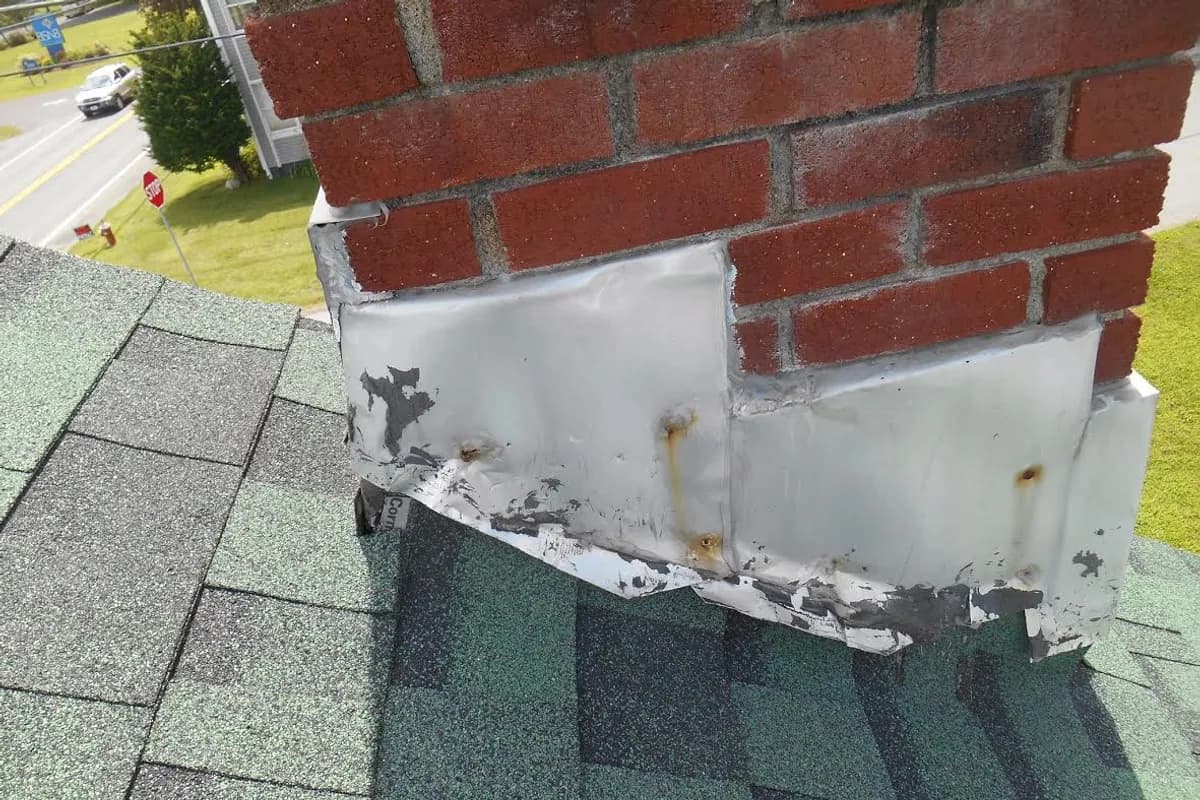
6 min read
How Flashing Protects Roof Penetrations
A roof is a continuous surface interrupted by holes. Flashing is the craft of making those interruptions shed water.
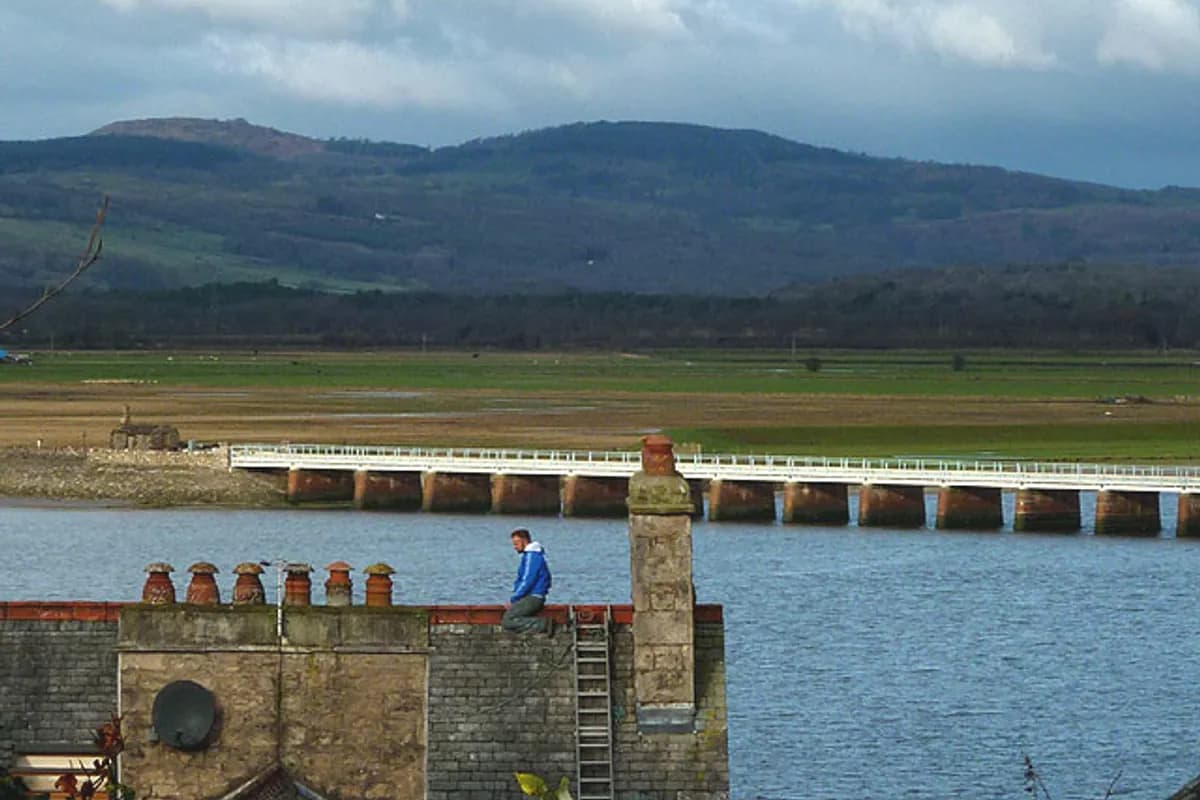
7 min read
What Happens During a Professional Roof Inspection
A good inspection is mostly spent at the junctions. The middle of the roof is rarely where the trouble is.
Ask about a roof in Mount Holly
Tell us about the roof. The municipality page you are on is recorded for context only — the property address you give is what we use.