Roof Repair in Burlington County, New Jersey
Most roofs do not fail all at once. They fail at a seam, a fastener, a pipe collar or a joint where two planes meet — a spot measured in inches that has been quietly letting water past for a season or two before anyone sees a stain. Repair work is the business of finding that spot, understanding why it opened up, and closing it properly.
Burlington County gives roofs an unusually wide range of things to cope with. A 1950s Cape in Palmyra, a Levitt-era ranch in Willingboro, a 1990s colonial on a wooded acre in Medford and a low-slope retail building on Route 73 all leak for different reasons, and a repair that suits one would be the wrong answer on another.
The goal of a repair is not to make a stain disappear. It is to establish whether the roof still has serviceable life, fix what is genuinely broken, and tell you plainly when patching has stopped being the sensible option.
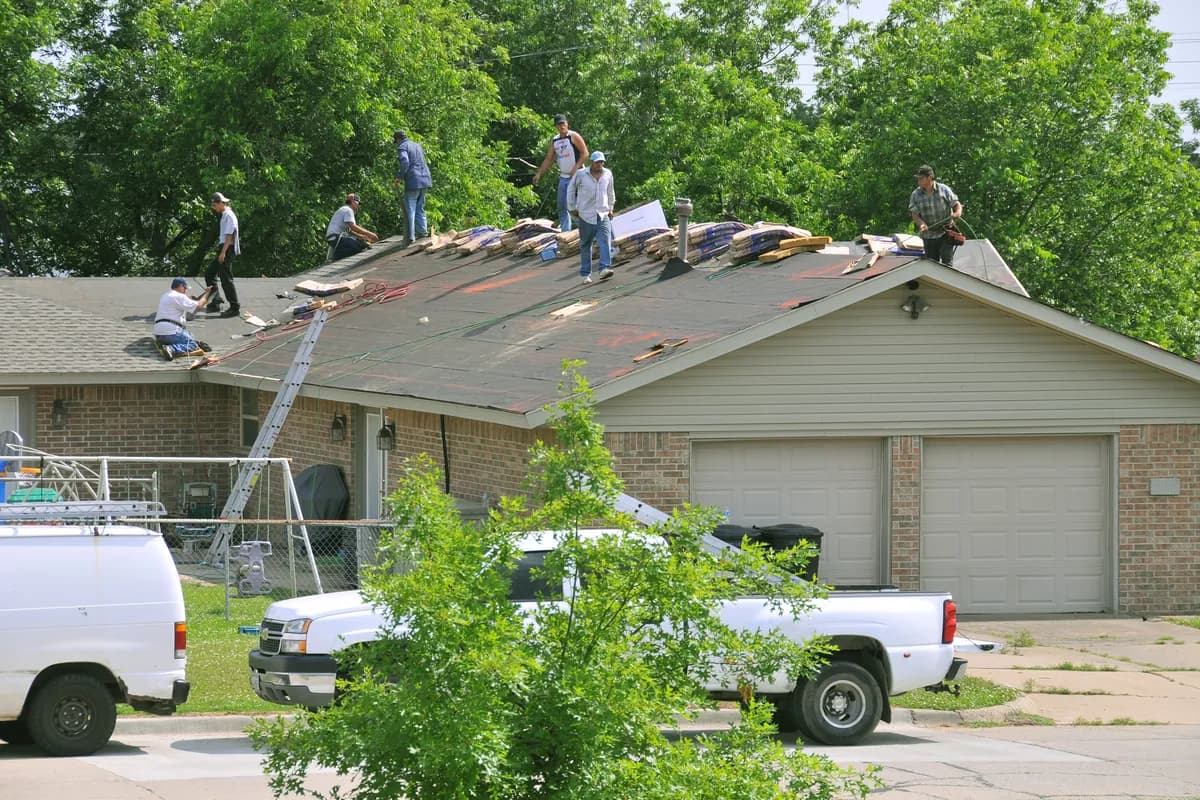
Photo: Win Henderson / Public domain, via Wikimedia Commons
Signs
When roof repair is the right call
- A ceiling or wall stain that darkens after heavy rain
- Shingles missing, lifted or curled after a windy night
- Granules collecting at the bottom of downspouts
- Daylight or damp sheathing visible from inside the attic
- Water tracking down a chimney chase or around a skylight
- Drips that only appear during wind-driven rain, not steady rain
Finding where the water is actually getting in
Water rarely enters where it appears. It travels along the underside of decking, follows a rafter, runs down a truss chord and drops onto ceiling drywall several feet from the breach. That is why a repair starts with tracing rather than patching: the visible stain is evidence, not a location.
A useful diagnosis works from both sides. Above the roof line, the search is for a failed termination — a lifted shingle tab, a separated flashing leg, a split vent boot, a nail that has backed out and lifted the course above it. Underneath, in the attic or the ceiling cavity, the search is for the highest point of moisture, because water only travels downhill.
- Staining patterns that indicate the entry point is uphill of the damage
- Fastener corrosion and nail pops that break the shingle seal
- Sheathing discolouration, delamination or soft spots underfoot
- Insulation that is compacted or stained where water has passed
Flashing: where most roofs actually leak
Flashing is the metal that carries water across the joints a roof cannot shingle over — where the roof meets a wall, a chimney, a dormer cheek or a skylight curb. It does more work than any other component and is the most common source of a persistent leak.
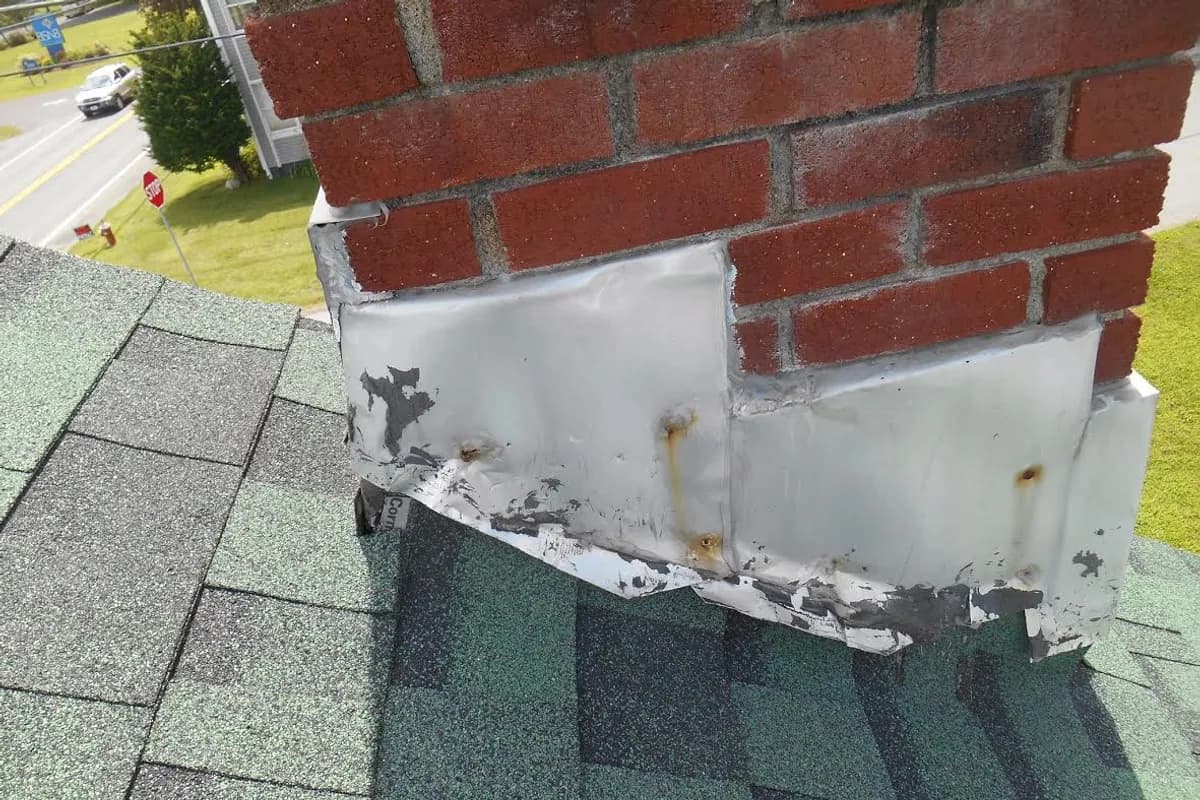
Failures are usually mundane. Step flashing gets nailed through its face instead of being woven course by course. Counter-flashing works loose from a mortar joint. Someone seals a chimney with roofing cement, the cement dries, cracks and then holds water against the masonry instead of shedding it. Sealant is a finishing detail on a correctly built flashing, never a substitute for one.
- Step flashing at sidewalls and dormer cheeks
- Chimney base, step and counter-flashing, and cricket condition where one exists
- Skylight curb flashing and the head flashing above it
- Apron and headwall flashing where a roof plane meets vertical siding
Roof valleys and penetrations
A valley concentrates the runoff of two roof planes into one channel. On a large Burlington County colonial with several gables, a single valley can carry the drainage of half the roof, which is why valleys wear faster than the field and why debris caught in one causes trouble so quickly.
Penetrations are the other concentration of risk. Plumbing vent boots have a rubber collar that hardens and splits, typically well before the shingles around them are worn out — a split collar is one of the most common causes of a leak on an otherwise healthy roof. Bathroom and kitchen exhaust terminations, attic vents, satellite mounts and old antenna anchors all deserve the same attention.
- Open, closed-cut and woven valleys, and the wear each one shows
- Plumbing vent boot collars — the most common single-point failure
- Exhaust terminations that discharge into the attic instead of outdoors
- Abandoned mounts and fastener holes left from removed equipment
Wind damage and missing shingles
Asphalt shingles rely on a strip of factory adhesive that bonds each course to the one below. Once that seal breaks — from age, from a cold installation that never fully bonded, or from a gust that lifted the tab — the shingle is a flap rather than a seal, and the next storm will find it.
Damage often shows up first along rakes, ridges and the windward edge of the roof, where uplift is highest. A repair that only replaces the shingles that blew away, without re-sealing the compromised tabs around them, tends to be followed by another call after the next front comes through.
Decking, and when a repair becomes a replacement
Once the shingles come off a repair area, the decking underneath tells you how long the leak has been running. Plywood that has been wet repeatedly delaminates; older plank sheathing rots at the fastener line and along joints. Neither will hold a nail properly, and a shingle fastened into soft decking is a future failure.
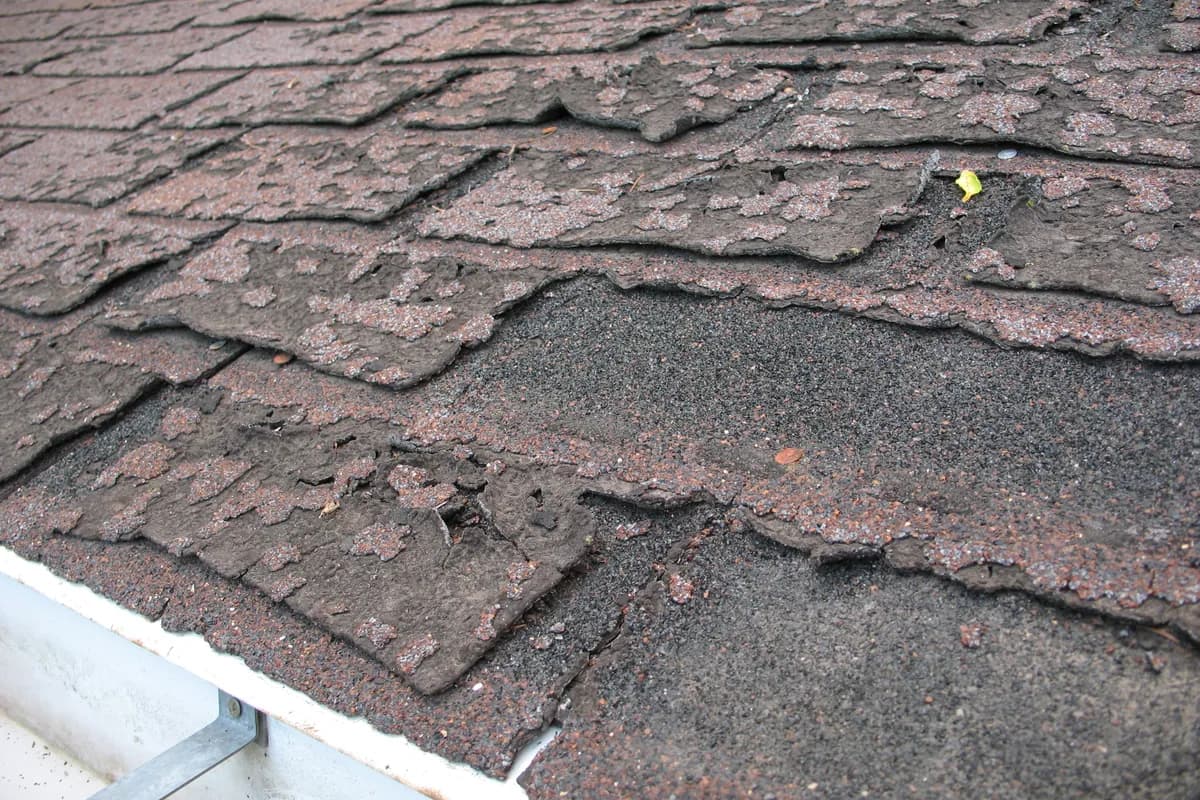
This is also the point where an honest answer matters. If the field of the roof is brittle, the granule loss is general rather than local, the seals have failed broadly and there are repairs on top of repairs, another patch buys a season at best. Getting that judgement right — repair, or replace — is the most valuable part of the visit.
Process
How the work is approached
- 01
Understand the symptom
When it leaks, how much, and under which conditions. A leak that only appears in wind-driven rain points somewhere different from one that appears in any steady downpour.
- 02
Inspect from both sides
The roof surface for failed terminations, and the attic or ceiling cavity for the highest point of moisture.
- 03
Establish the cause, not just the location
A repair that fixes the hole but not the reason it opened tends to be temporary.
- 04
Set out the options in writing
What needs doing, what can wait, and where a repair stops making sense against replacement.
- 05
Carry out the repair
Open the affected area, replace failed components, correct the flashing detail and re-establish the water path.
- 06
Check the result
Confirm the repair sheds water correctly and that surrounding components were not disturbed.
Questions
Roof Repair: common questions
Can a roof leak be repaired, or does the whole roof have to be replaced?
It depends on whether the failure is local or general. A split vent boot, a length of failed step flashing or a patch of wind-damaged shingles on an otherwise sound roof is a repair. A roof that is losing granules across the whole field, has widespread broken seals and is at the end of its service life is one where repairs stop being economic. The purpose of the inspection is to tell you which of those you have.
Why does my ceiling stain appear several feet from the hole in the roof?
Water entering a roof runs along the underside of the decking and down rafters before it drops. Following a stain straight up is one of the most common reasons a repair misses. The entry point is always at or above the highest damp point, which is why the attic side matters as much as the roof surface.
My roof only leaks in certain storms. Is that normal?
It is a useful clue. A leak that appears only when rain is being driven sideways usually means water is being pushed under a lap or behind a piece of flashing that sheds a vertical fall perfectly well. Leaks that appear in any heavy rain more often point to a hole, a split boot or a blocked valley.
Is roofing cement a real repair?
It has a place as a sealant on a properly built detail. Used as a substitute for correct flashing it causes problems, because it becomes brittle, cracks and then traps water against the joint it was meant to protect. If a previous repair on your roof is mostly black sealant, it is worth looking at what is underneath it.
Do you repair flat and low-slope roofs as well as shingle roofs?
Yes. Low-slope roofs are common on additions, porches, dormers and commercial buildings across the county, and they fail differently — at seams, at terminations and at drains rather than at shingle courses. They are covered under flat roofing.
How quickly can a leaking roof be looked at?
Get in touch by phone for anything actively coming into the building; urgent work is handled under emergency roof repair. Response times are not promised on this page because they depend on the day, the weather and how many properties are affected at once.


Related
Related services and reading
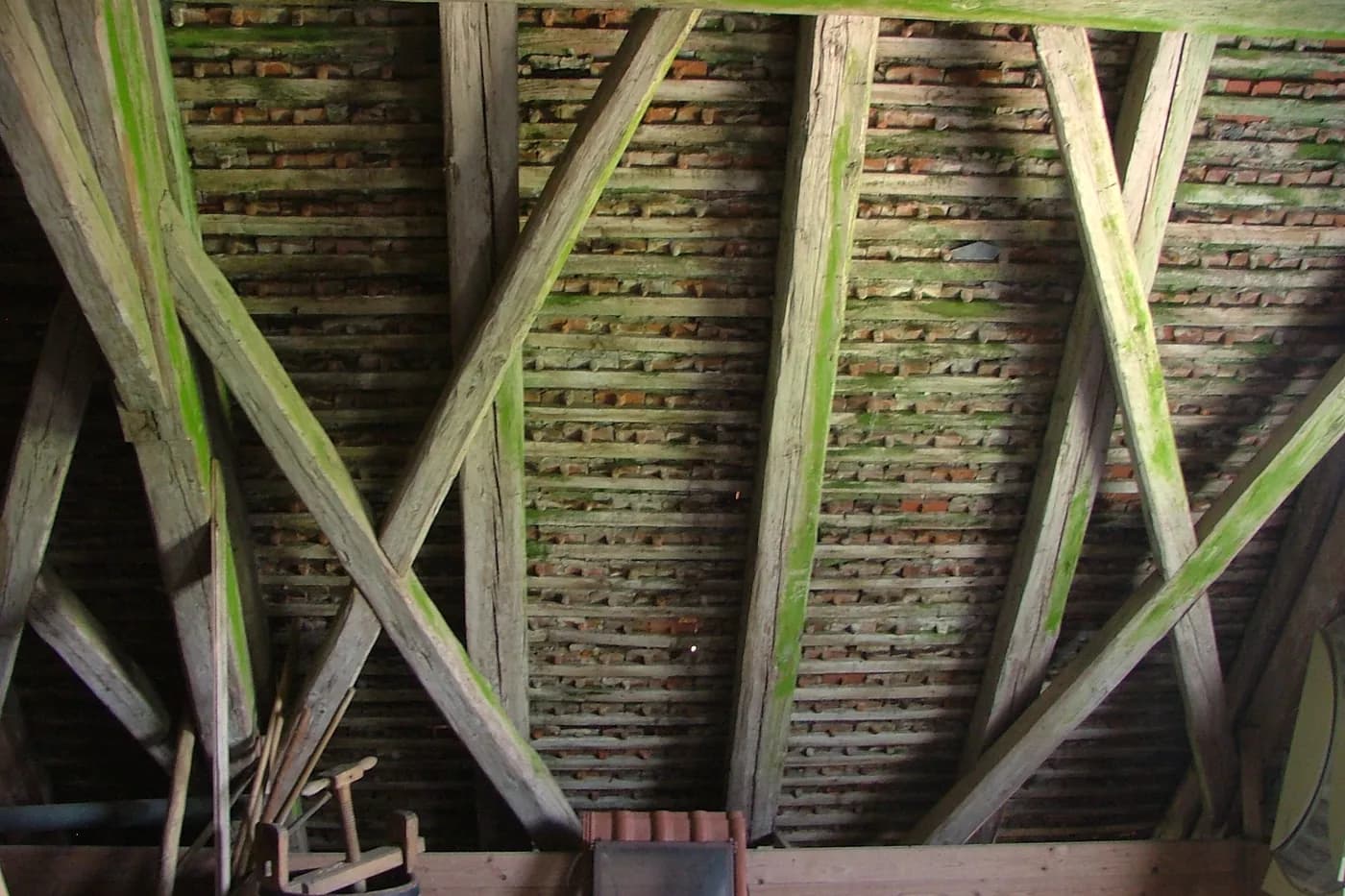
7 min read
Roof Leak Warning Signs Homeowners Miss
By the time water drips from a ceiling, it has usually been getting in for months. The earlier signals are quieter, and most of them are not wet.
6 min read
Why Roof Valleys Are Common Leak Areas
A valley may carry half a roof's drainage through a channel a few inches wide. It is the hardest-working part of the covering.
6 min read
How Flashing Protects Roof Penetrations
A roof is a continuous surface interrupted by holes. Flashing is the craft of making those interruptions shed water.
Ask about roof repair
Tell us what is happening and we will get back to you about it. Fields marked * are required; everything else is optional.