Residential Roofing in Burlington County, New Jersey
Burlington County is the largest county in New Jersey by land area, and its housing reflects that range. A brick twin in Riverside, a Levitt ranch in Willingboro, a Victorian in Riverton, a centre-hall colonial in Moorestown, a log cabin in Medford Lakes and a modern build on two wooded acres in Tabernacle are all residential roofs, and almost nothing about them is the same.
What they have in common is the assembly: deck, water barriers, metal at every junction, covering, and ventilation. What differs is geometry, exposure, age of the structure, the tree cover around it and the way water leaves the property.
Residential work here covers repair, replacement, new installation and inspection — the same trade applied to whichever of those a particular house needs.
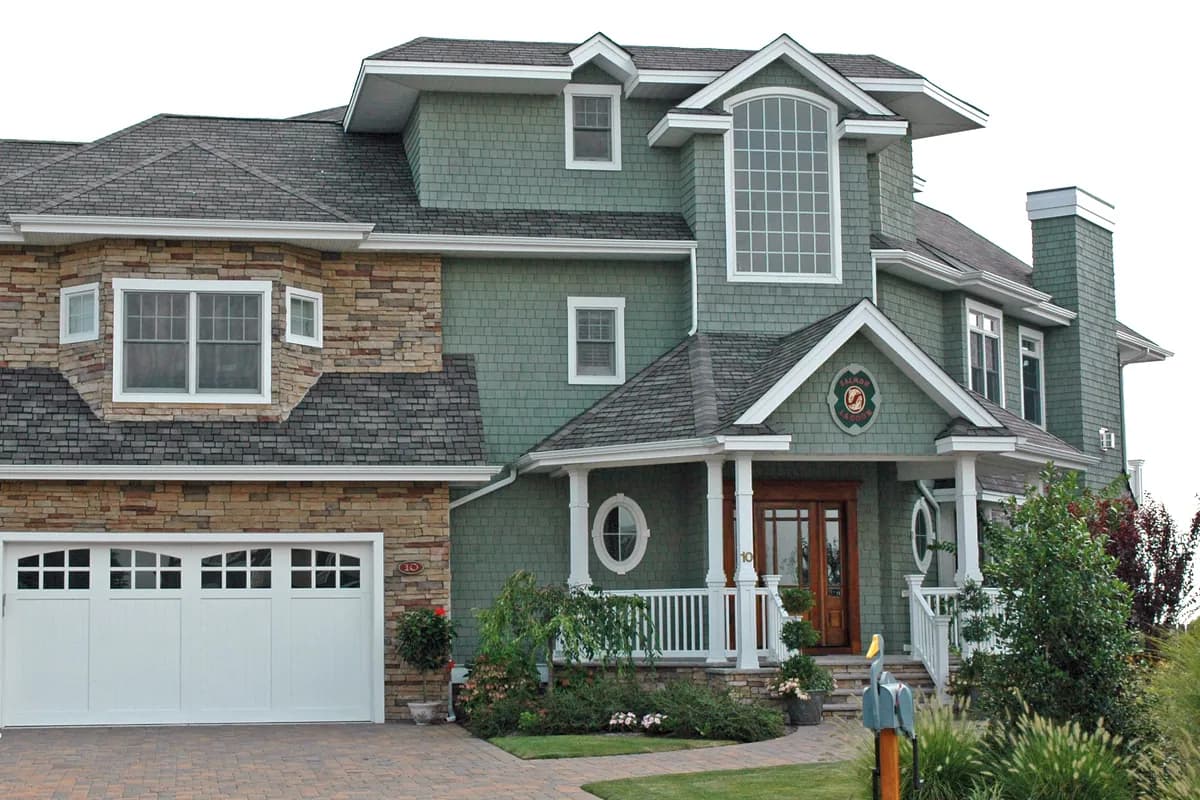
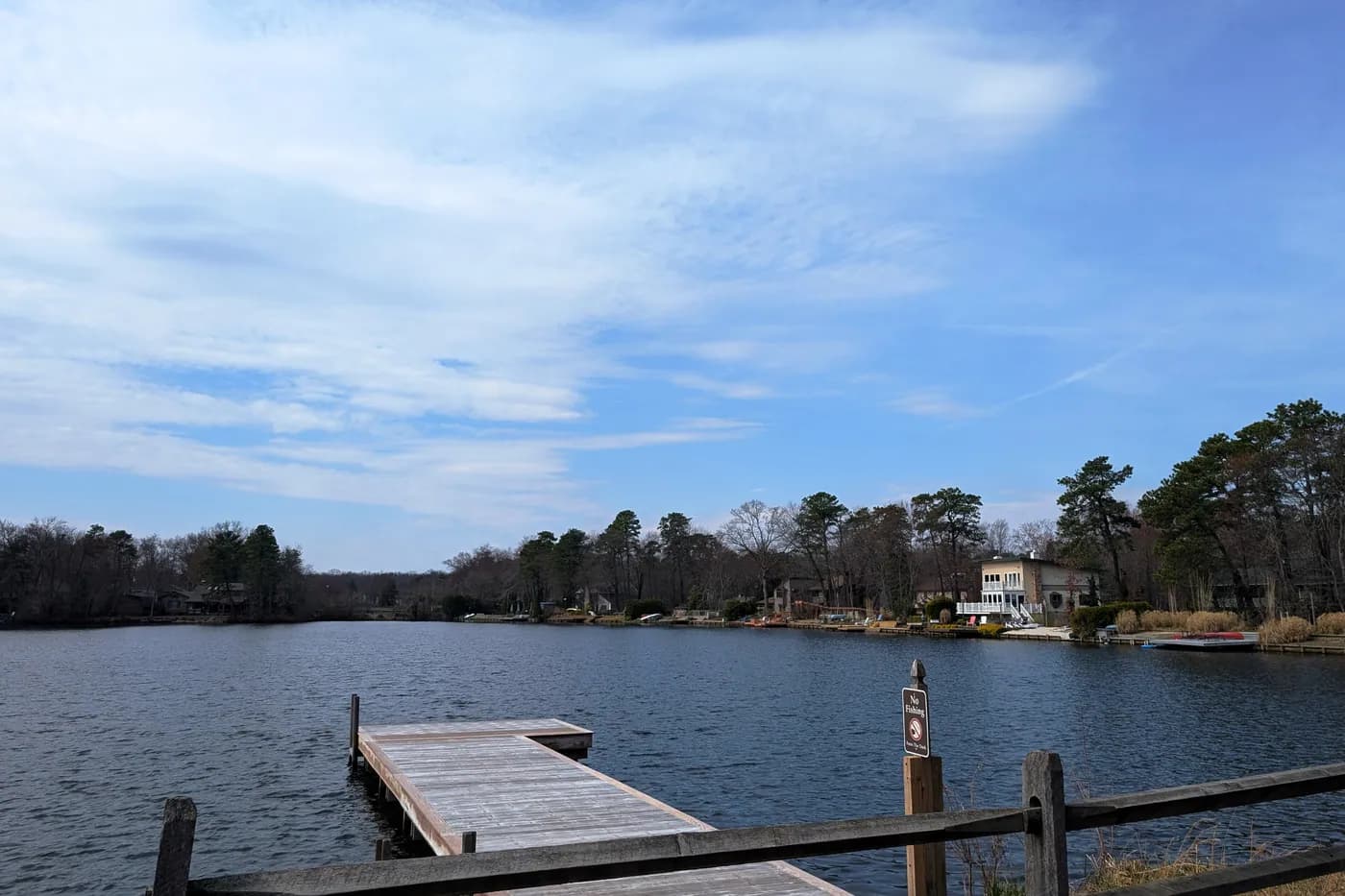
Photo: User:Tallguy0187 / CC BY 3.0, via Wikimedia Commons
Signs
When residential roofing is the right call
- Interior stains, damp patches or peeling paint on ceilings
- Shingles that look uneven, patchy or worn from the street
- A roof of unknown age on a recently purchased house
- Gutters pulling away, overflowing or full of granules
- An attic that is hot, humid or smells musty
- Ice building along the eaves in cold weather
The county's housing stock, and what it means for roofs
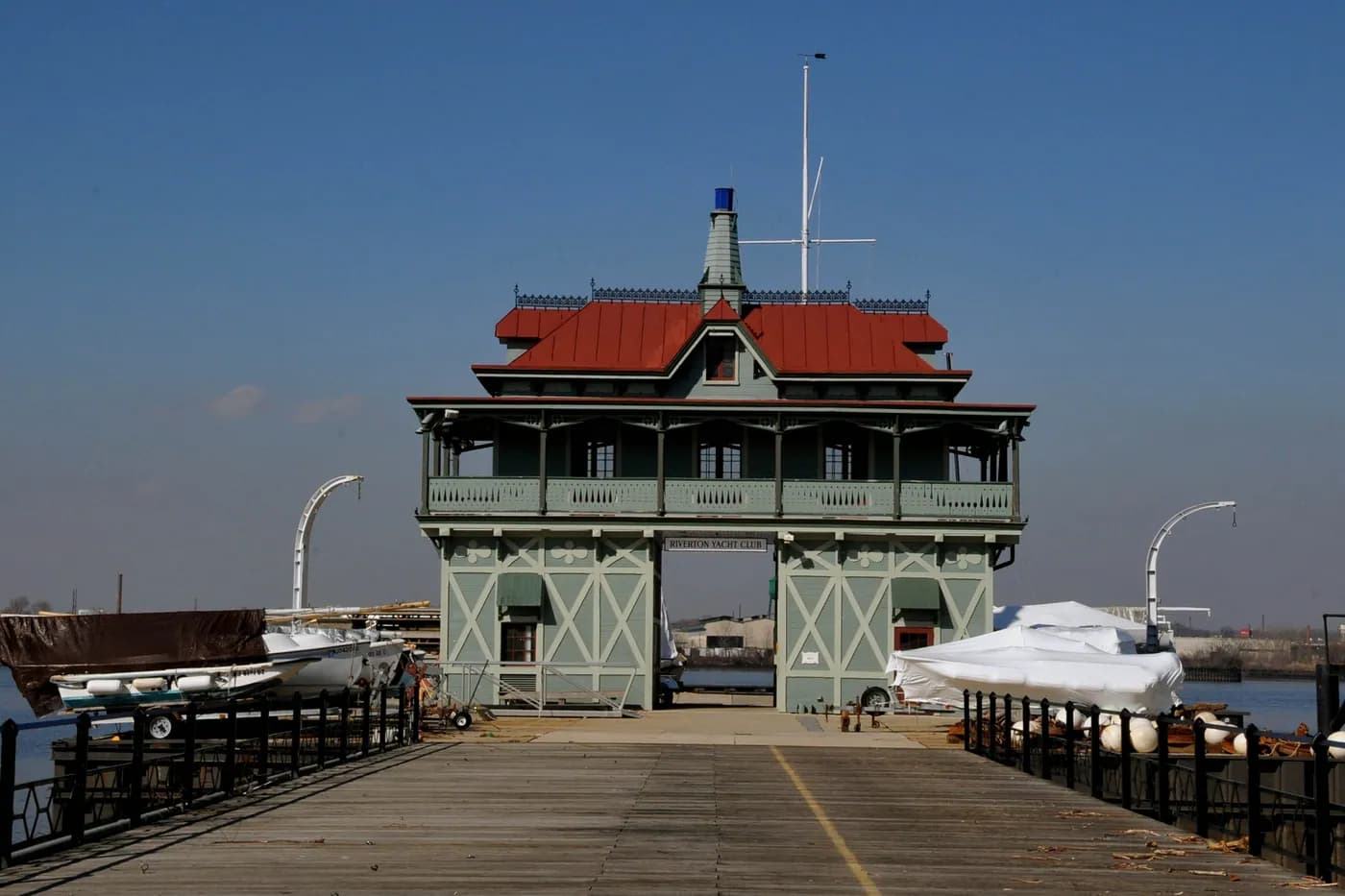
The older river communities along the Delaware — Burlington City, Beverly, Riverside, Riverton, Palmyra, Bordentown — contain a great deal of 19th and early 20th century housing: steeper pitches, more complex rooflines, porch roofs at low slope, masonry chimneys, and in many cases plank sheathing rather than plywood. These roofs have more junctions per square foot than anything built since, and junctions are where roofs leak.
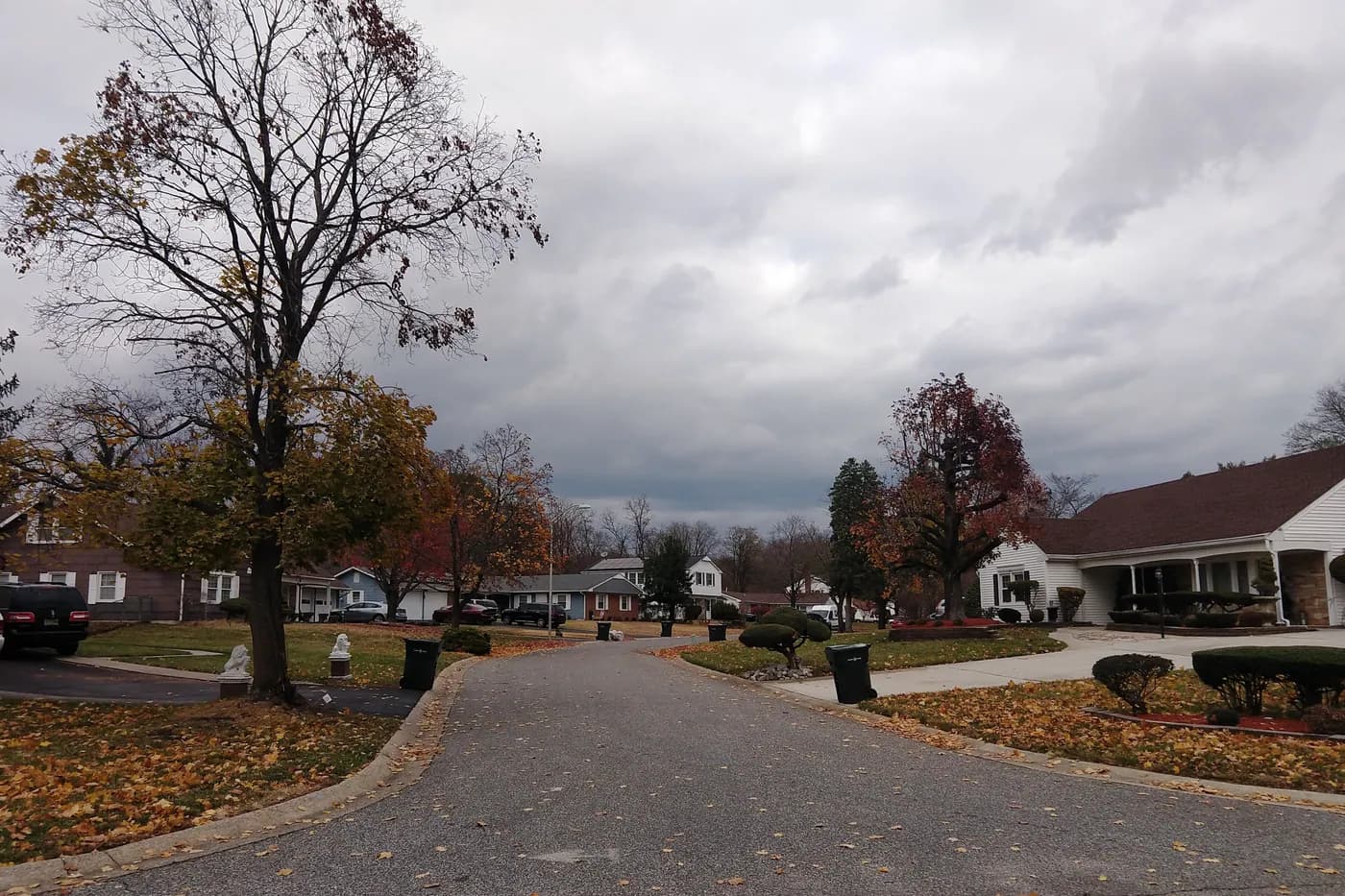
The post-war and mid-century suburbs are a different problem entirely. Willingboro's Levitt-built housing, the ranches and split-levels of Maple Shade, Delran and Cinnaminson, and the Capes scattered through the older boroughs tend to have simple geometry, shallower pitches and long unbroken runs — but also shallow eaves, minimal overhang and ventilation schemes that were never generous to begin with.
The later subdivisions in Mount Laurel, Evesham, Lumberton and Medford brought larger, more articulated roofs: multiple gables, several valleys, dormers, bay projections and attached garages set at an angle. More roof area, more valleys, more flashing, and more that can go wrong at a junction.
Setting matters as much as the house
Two identical houses age differently depending on where they stand. A roof under a mature canopy in the wooded south and east of the county stays damp longer after rain, collects organic debris continuously rather than seasonally, and carries more shade-related growth on its north-facing slopes. A roof on an open lot in the agricultural north of the county dries quickly but takes far more direct sun and more uninterrupted wind.
Neither is worse. They simply fail in different ways and on different timescales, and the maintenance that suits one is largely wasted on the other.
What a residential roof actually needs
Most houses need remarkably little between repairs: the drainage kept clear, the penetrations checked periodically, and the roof looked at after significant weather. The components that fail first — vent boot collars, sealed flashing joints, ridge cap, the seal on the windward slope — are all cheap to address early and expensive to address after a season of water in the decking.
The other thing a house needs is an honest answer about where its roof is in its life, so that a replacement can be planned rather than triggered by a ceiling stain in February.
- Keep valleys and gutters clear so water leaves the roof as designed
- Check penetrations — vent boots are the most common single failure
- Look at the roof after storms, not only after leaks
- Make sure the attic can breathe: intake at the eaves, exhaust near the ridge
- Know roughly how old the covering is, and plan rather than react
Process
How the work is approached
- 01
Understand the house
Age, geometry, covering, previous work and the setting it sits in.
- 02
Assess the roof
Surface, junctions, penetrations, drainage and — where accessible — the attic side.
- 03
Explain what was found
In plain terms: what is urgent, what is worth watching, and what is fine.
- 04
Agree the work
Repair, replacement or planned maintenance, priced in writing.
- 05
Carry it out and clean up
Including protection of the property and a thorough clear-down afterwards.
Questions
Residential Roofing: common questions
Which roofing service does my house need?
If there is a specific leak, it is roof repair. If the covering is worn across the whole roof, it is replacement. If you are not sure — which is very common — a roof inspection establishes which of those you are dealing with before any money is committed.
Does an older house need a different approach?
Frequently, yes. Older homes in the river towns and historic districts often have plank sheathing, steeper and more complex roof planes, masonry chimneys needing rebuilt flashing, and low-slope porch roofs that cannot take shingles. None of that is a problem, but it does mean the work is not the same as re-covering a 1980s colonial.
My house is shaded by large trees. Does that change anything?
It changes the maintenance rather than the roof. Shaded roofs dry more slowly, hold organic debris and show more growth on north-facing slopes, so drainage and debris removal matter considerably more than on an open lot.
How do I know how old my roof is?
The house's sale documents or permit records often show it. Failing that, the condition tells you a good deal: granule loss, seal condition, the state of the vent boots and whether there is more than one layer on the deck all indicate roughly where a roof is in its life.
Do you work on twins, rowhomes and attached properties?
Yes. Attached properties bring their own considerations — party wall flashing, shared or continuous roof planes, and access — and those are worth identifying before work starts rather than on the morning.
Where this comes up
Residential Roofing around Burlington County
Related
Related services and reading
7 min read
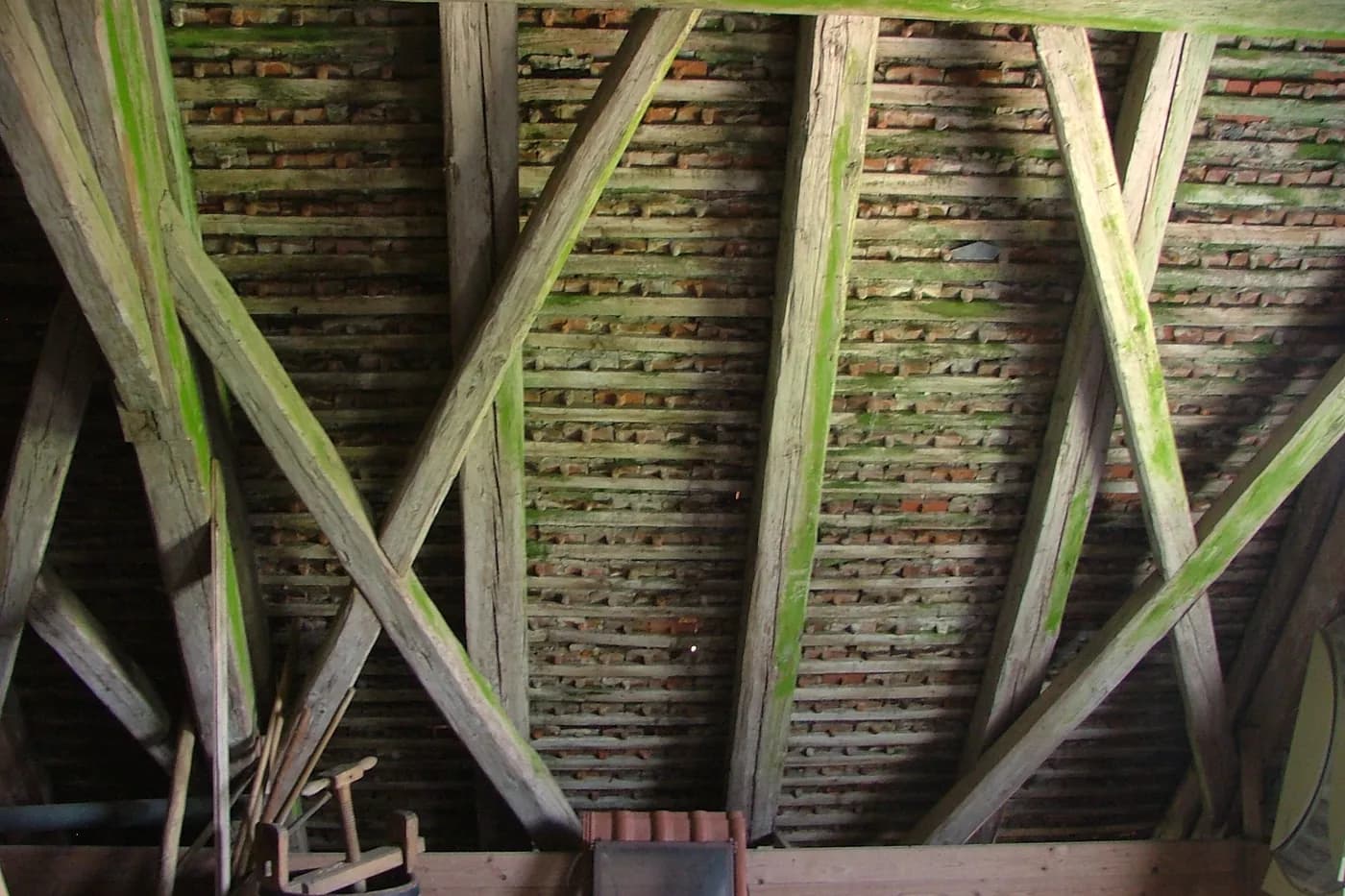
Roof Leak Warning Signs Homeowners Miss
By the time water drips from a ceiling, it has usually been getting in for months. The earlier signals are quieter, and most of them are not wet.
7 min read
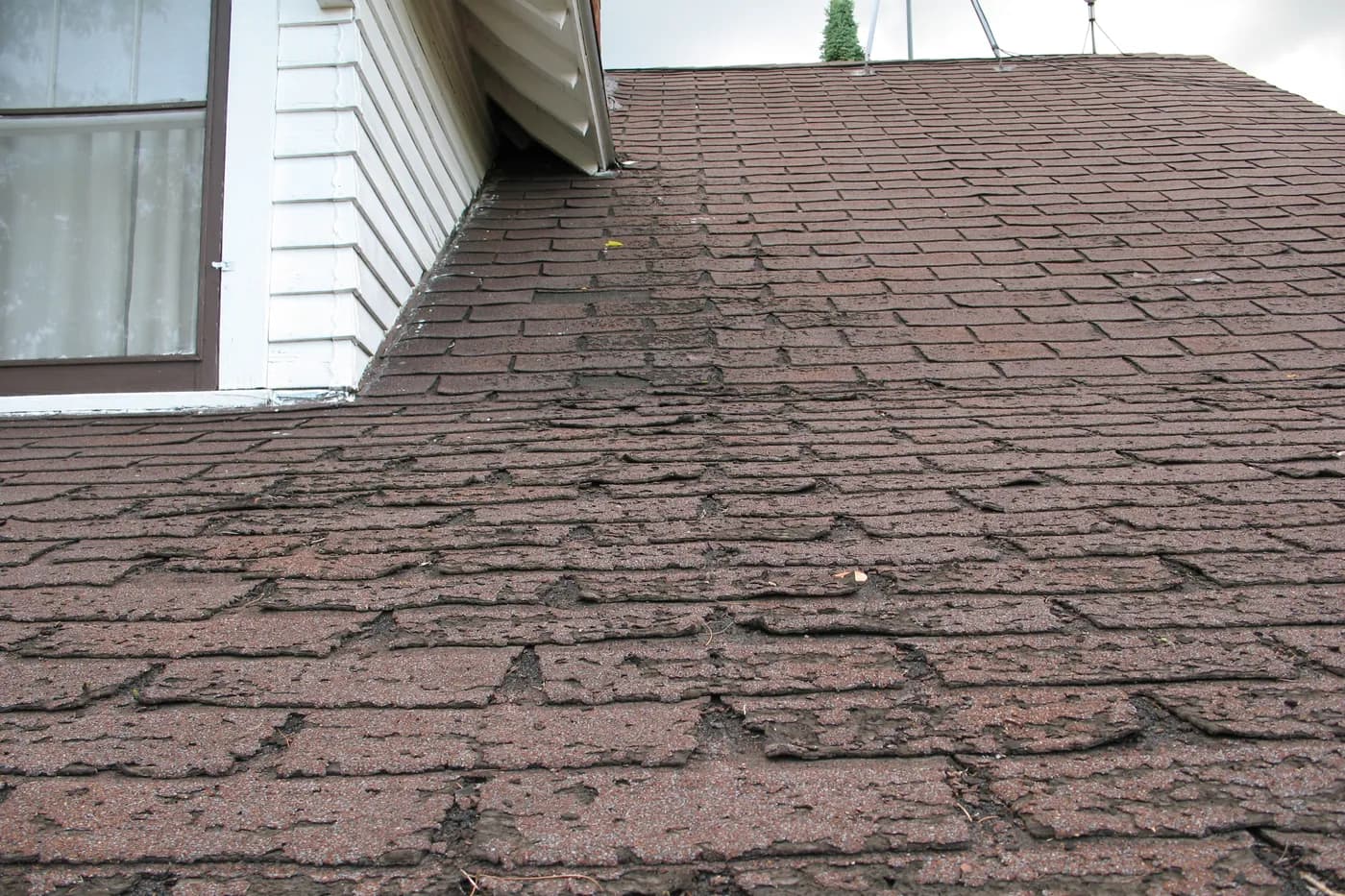
Asphalt Shingle Roof Lifespan in New Jersey
The number on the warranty and the number of years a roof lasts are two different things, and they are not closely related.
7 min read
When Is Roof Replacement Better Than Another Repair?
The honest answer usually turns on one distinction: whether the failure is in one place, or everywhere at once.
Ask about residential roofing
Tell us what is happening and we will get back to you about it. Fields marked * are required; everything else is optional.