Gutter Services in Burlington County, New Jersey
Gutters are usually thought of as separate from the roof. They are not. The roof collects the water, the gutter catches it at the edge, and the downspout takes it away from the building — and if any part of that chain fails, the roof edge is where the consequences show up.
This matters a great deal in the wooded parts of Burlington County. A house under mature oaks in Medford, Shamong or Tabernacle can fill its gutters with leaves in a fortnight each autumn, and with seed, catkins and twigs for much of the spring. A house on an open lot in the farmland of the north of the county may go a year without trouble.
The work here covers what genuinely belongs to a roofing contractor: the gutters, the downspouts, the roof edge they attach to, and the fascia behind them.
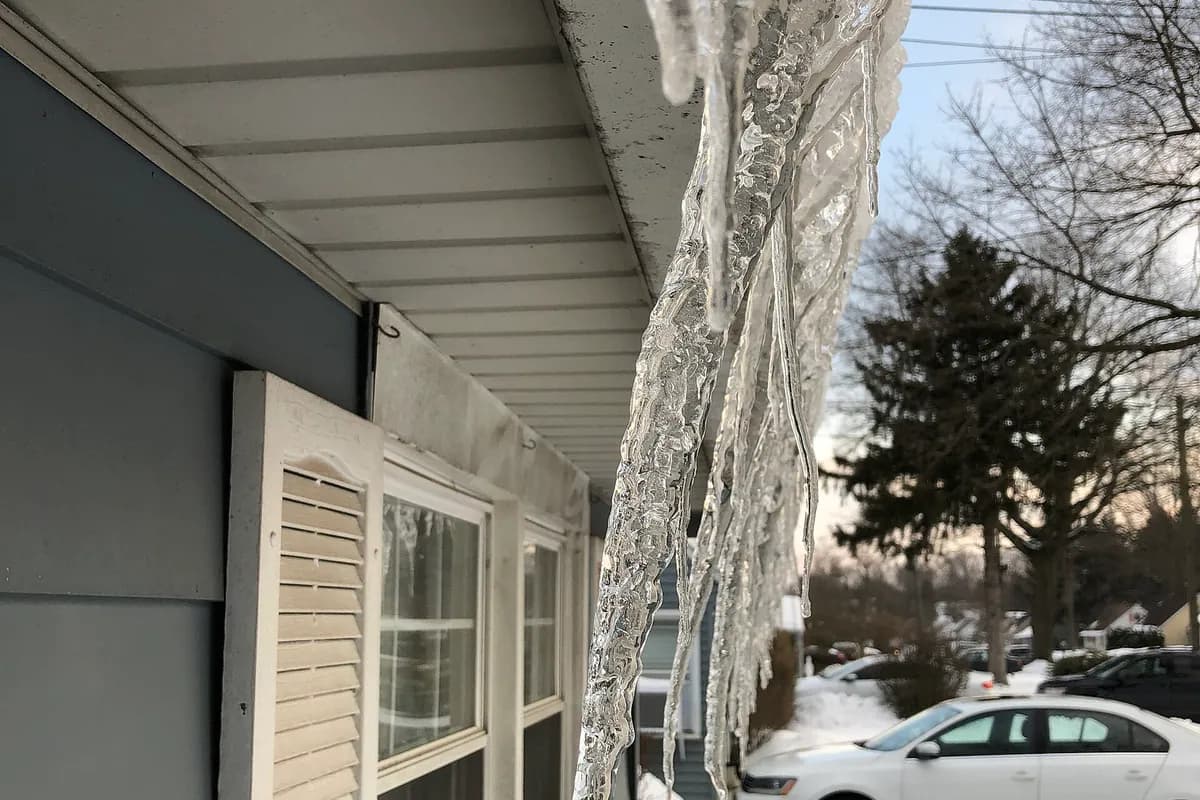
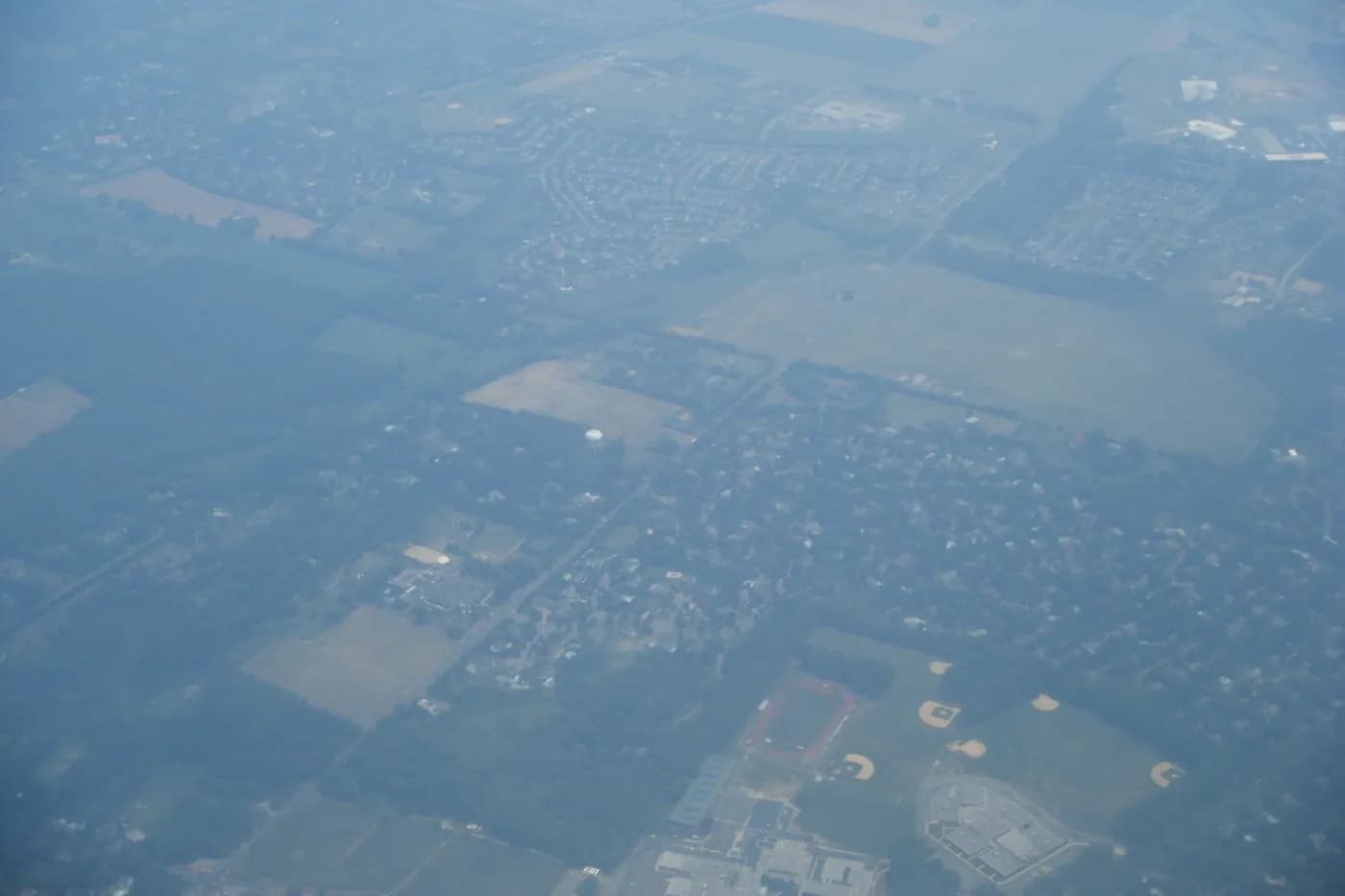
Photo: Famartin / CC BY-SA 4.0, via Wikimedia Commons
Signs
When gutter services is the right call
- Water sheeting over the front edge of a gutter during rain
- Gutters sagging, pulling away from the fascia, or visibly out of line
- Plants or saplings growing out of the gutter
- Staining or rot on the fascia board behind the gutter
- Water pooling against the foundation below a downspout
- Ice building along the gutter line and eaves in winter
What a blocked gutter does to the roof
When a gutter fills, water backs up over its rear edge — the side against the building — rather than running off the front. That puts water directly onto the roof edge, behind the drip edge, and onto the fascia and the ends of the rafters.
The result is a slow, invisible failure. The first evidence is usually soft fascia or a stain at the top of an exterior wall, long after the water has been getting into the edge of the roof deck. A gutter that overflows over the front is a nuisance; one that backs up behind is a roofing problem.
The roof edge itself
The drip edge is the small piece of metal at the eaves that carries water off the deck and into the gutter rather than letting it wick back underneath. On older roofs it is frequently missing altogether, and on some replacements it gets omitted or installed in the wrong sequence.
Sequence matters: at the eaves the drip edge goes under the underlayment, and at the rake it goes over. Reversed, it directs water exactly where it should not go. It is a detail worth checking on any roof with unexplained fascia damage.
- Drip edge present, correctly sequenced and properly lapped
- Fascia sound enough to carry a loaded gutter
- Gutter hung with the right pitch toward the outlet
- The gap behind the gutter kept clear so water cannot track back
Downspouts and where the water goes
A gutter is only as good as its outlet. Undersized or too-few downspouts leave the gutter overwhelmed in heavy rain regardless of how clean it is, and Burlington County's summer thunderstorms deliver exactly the kind of short, intense rainfall that finds that limit.
Where the water lands is the other half of the problem. A downspout discharging at the foundation saturates the ground against the building, and that is a basement issue rather than a roof one — but it starts at the roof, so it belongs in the same conversation. Extensions, splash blocks or a connection to a proper drainage run all move the water somewhere better.
Leaves, guards and honest expectations
On a heavily wooded lot, gutter guards genuinely reduce how often gutters need clearing. They do not eliminate it. Fine debris — shingle granules, seed, pine needles, the catkins that come down in spring — still accumulates, and some guard designs cause their own problems by shedding water over the front in heavy rain.
The realistic position is that guards change the interval rather than removing the task, and that a guard which has never been checked is doing an unknown amount of good. Anyone promising you will never clean your gutters again is overselling.
Ice at the eaves
Icicles and a frozen gutter are where the problem becomes visible, not where it begins. A warm attic thaws snow high on the roof; the runoff reaches the unheated overhang, freezes again, and builds a dam that forces the next thaw sideways under the shingles.
Clearing gutters and installing eave membrane both help, but the actual fix is upstream: get the attic cold by sealing the air leaks and making sure intake and exhaust ventilation work. Treating it purely as a gutter problem means doing it again every winter.
Process
How the work is approached
- 01
Look at the whole drainage path
Roof edge, gutter, downspout and where the water finally lands.
- 02
Clear and test
Remove debris, then run water through to confirm it flows to the outlet rather than pooling.
- 03
Check the fascia and roof edge
Rot, drip edge condition and whether the fascia can carry a loaded gutter.
- 04
Correct the hanging
Pitch, spacing and fastening, so the gutter drains to its outlet.
- 05
Address the discharge
Downspout capacity and getting the water away from the foundation.
- 06
Set a realistic interval
Based on the actual tree cover over the property, not a generic schedule.
Questions
Gutter Services: common questions
How often should gutters be cleaned?
It depends entirely on what is above them. A house under mature deciduous trees in the wooded parts of the county may need clearing two or three times a year, including once well after leaf fall finishes. A house on an open lot may manage comfortably on once a year.
Are gutter guards worth installing?
On a heavily wooded lot they meaningfully reduce how often gutters need clearing, which is worth something. They do not make gutters maintenance-free — fine debris still accumulates, and some designs shed water over the front in very heavy rain. Treat them as a reduction in frequency, not an elimination.
Can overflowing gutters really damage the roof?
Yes, and the damaging case is the one you cannot see. When a gutter backs up behind, water goes onto the roof edge and the fascia rather than over the front. That rots fascia and rafter ends and can get into the edge of the deck, usually well before anything appears indoors.
Why is there ice on my gutters every winter?
Generally because warm air is escaping into the attic, melting snow higher up the roof, which then refreezes at the cold eave. Gutters are where it shows, not where it starts. The durable fix is air sealing and ventilation, with eave membrane protecting the roof edge.
Do you replace fascia as well as gutters?
Rotten fascia has to be dealt with, because there is nothing sound to hang a gutter from otherwise. Where the damage extends beyond the roof edge into framing or siding, that is worth identifying early — it can be a carpentry job rather than a roofing one.
My downspout empties next to the house. Is that a problem?
It concentrates a great deal of roof water against the foundation, which tends to show up as a damp basement. Extensions, splash blocks or a connection into a drainage run all move it far enough away to help.
Where this comes up
Gutter Services around Burlington County
Related
Related services and reading
6 min read
How Gutter Drainage Affects the Roof Edge
The dangerous overflow is not the one you can see from the garden. It is the one going backwards, onto the roof.
6 min read
What Tree Debris Can Do to an Asphalt Shingle Roof
Debris on a roof is treated as untidiness. It is closer to a slow chemical and mechanical attack on the covering underneath it.
7 min read
What to Know About Roofing on Wooded Properties
A wooded lot does not just mean more leaves in the gutter. It changes how the roof ages, how it is maintained and how the work gets done.
Ask about gutter services
Tell us what is happening and we will get back to you about it. Fields marked * are required; everything else is optional.