What to Know About Roofing on Wooded Properties
Published · Updated · 7 min read
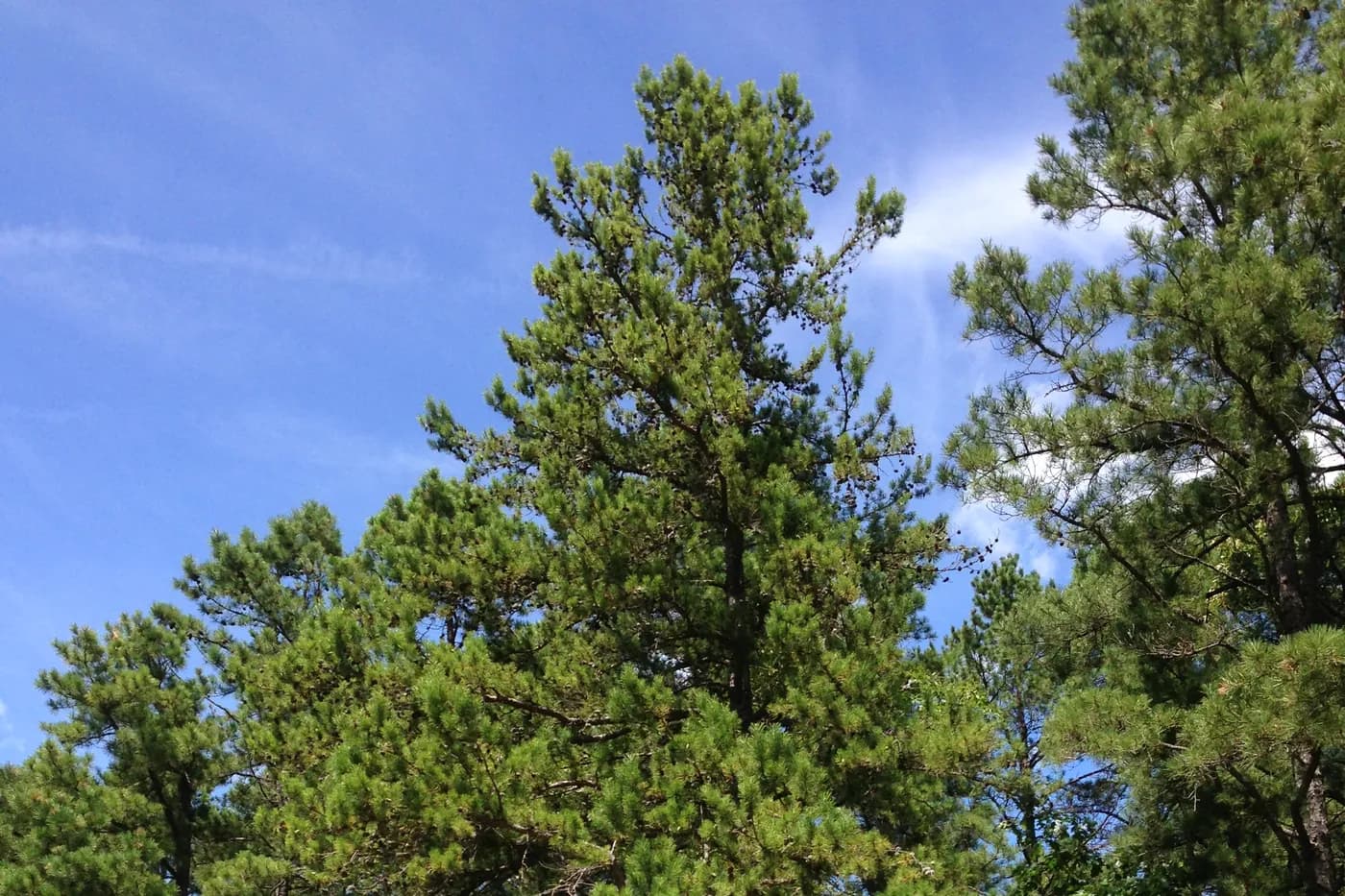
Photo: Famartin / CC BY-SA 4.0, via Wikimedia Commons
A large share of Burlington County's housing sits under substantial tree cover — heavily so through the Pinelands townships in the south and east of the county, and along the mature streets of the older river boroughs.
Those roofs are not simply the same roofs with more debris on them. They age on a different schedule, fail in different places, and need a different maintenance rhythm.
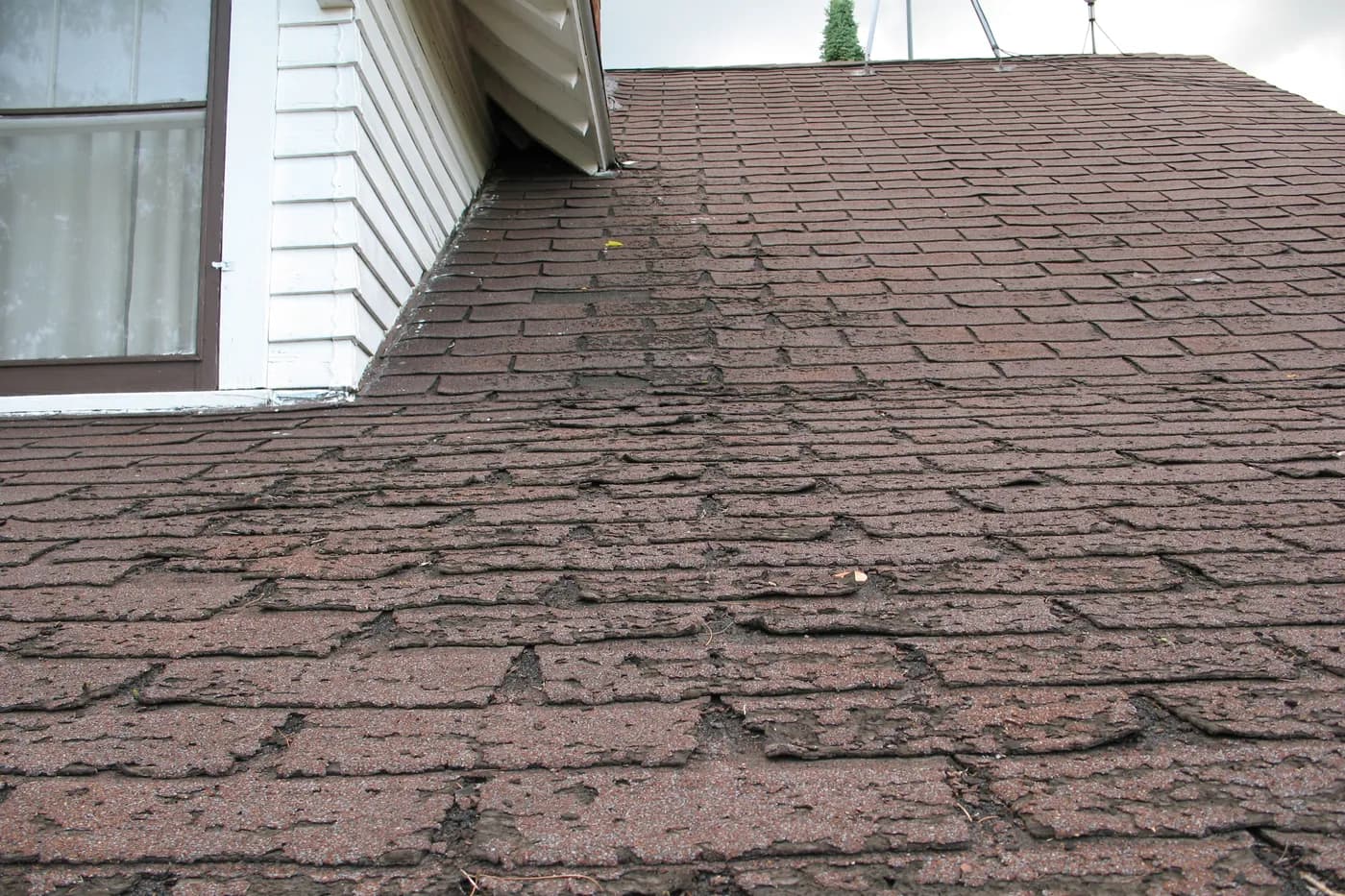
Shade slows drying, and slow drying ages roofs
The most consequential effect of tree cover is not debris — it is how long the roof stays wet. A shaded slope that would dry in two hours on an open lot may take most of a day, and through a damp autumn it may not fully dry for weeks.
That sustained moisture is what makes algae and moss viable, keeps organic debris decomposing on the surface rather than blowing off, and keeps the covering damp through freeze-and-thaw cycles.
Debris is continuous rather than seasonal
On an open lot, debris arrives in a burst in autumn. Under mature trees it arrives all year: buds and catkins in spring, twigs and seed through summer, leaves in autumn, and — where there are pines — needles more or less constantly.
That changes the maintenance interval fundamentally. A once-a-year autumn gutter clean, which is adequate on an open lot, leaves a wooded property blocked for much of the rest of the year.
Moss lifts shingles; algae mostly does not
Algae streaking is a cosmetic issue. Moss is a mechanical one: it grows thick, holds water, and grows into and under the bottom edges of shingles, physically lifting them. A lifted edge admits wind-driven rain and freezes with water trapped beneath it.
Where moss has established on a shaded slope it is worth addressing — carefully. Pressure washing strips granules and takes years off the roof, which is a far worse outcome than the moss.
Limb strikes and abrasion
Falling limbs are among the most common causes of sudden roof damage on wooded properties, and the damage is frequently structural rather than cosmetic: cracked decking or a broken rafter under shingles that look almost intact.
Branches that merely touch the roof cause a slower version of the same thing. Every time the wind moves them they abrade granules in a consistent arc, leaving a worn stripe where the UV protection is gone.
Access and property protection
Wooded lots complicate the work itself. Ladder placement is constrained, staging is harder, material delivery may not be able to reach the roof line directly, and there is often mature planting directly beneath the eaves that is easy to damage during a tear-off.
It is worth discussing before the job rather than on the morning: where the container goes, what path material takes, and what needs protecting.
A realistic maintenance rhythm
The interval should be set by what is actually above the roof, not by a generic schedule.
The one that matters most is clearing after leaf fall has genuinely finished — usually later than people expect — so the roof and gutters go into winter clear rather than packed.
- Clear the roof surface as well as the gutters, valleys especially
- Two or three gutter clearances a year under heavy deciduous cover
- One clearance after leaf fall has completely finished
- Check for limb contact and cut back where it can be done safely
- Inspect after storms, because limb damage often does not leak immediately
- Consider algae-resistant shingles at the next replacement on shaded slopes
Want someone to look at your roof?
Related services: Gutter Services, Roof Inspection, Storm Damage Roof Repair