What Tree Debris Can Do to an Asphalt Shingle Roof
Published · Updated · 6 min read
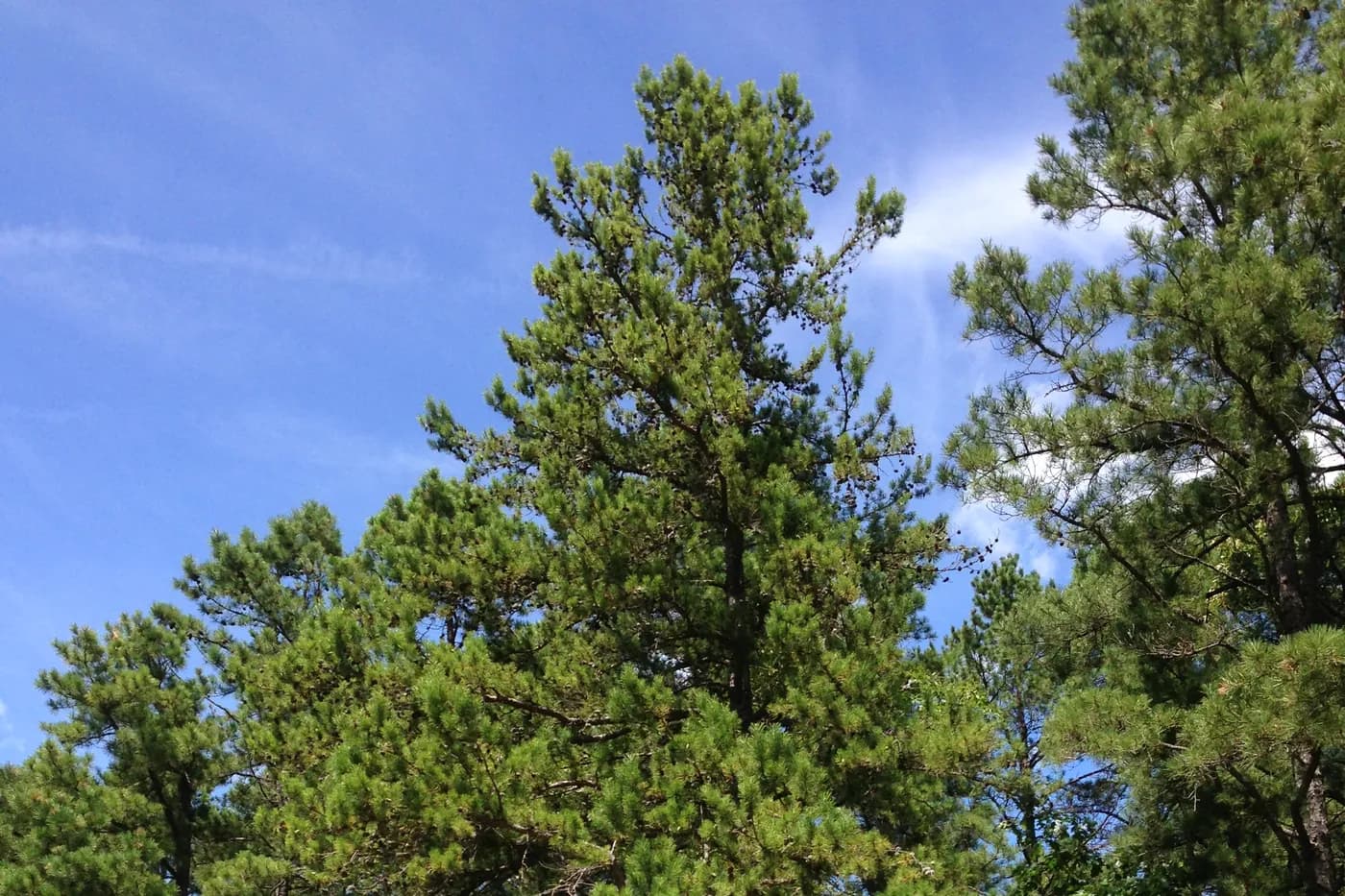
Photo: Famartin / CC BY-SA 4.0, via Wikimedia Commons
Large parts of Burlington County are genuinely wooded. The Pinelands townships in the south and east, the mature canopy over the older neighbourhoods of the river boroughs, and the wooded lots typical of Medford, Shamong, Tabernacle and Southampton all put a great deal of organic material onto roofs every year.
Most homeowners think of that as a gutter problem. It is a gutter problem, but it is also a roof problem, and the roof part is the one that costs more to put right.
Debris holds water where the roof is designed to shed it
An asphalt shingle roof works by moving water off quickly. Every hour that water sits on the surface instead of running off is an hour the covering spends wet.
A layer of wet leaves acts like a compress. It holds moisture against the shingle continuously, keeps the surface from drying between rainfalls, and creates exactly the damp, shaded conditions that algae and moss prefer. On a north-facing slope under trees, that layer may never fully dry from October through March.
Valleys are where it does real damage
Debris does not stay where it lands. Water pushes it downhill until something stops it, and on most roofs the thing that stops it is a valley.
A valley already carries the concentrated runoff of two roof planes. Pack it with leaves and needles and it stops being a channel — water backs up, spreads sideways under the shingle courses on either side, and gets past a detail that only works when water is moving through the middle of it. A blocked valley is one of the more common causes of a leak on a roof that is otherwise in decent condition.
Pine needles behave differently from leaves
Needles are worth treating as their own category, which matters in the Pinelands parts of the county. They are small enough to pass most gutter guards, they knit together into a dense mat that sheds water rather than letting it through, and they work their way under shingle edges and into the gaps around flashing in a way that broad leaves do not.
They are also acidic as they break down, and they hold moisture for a long time. A needle mat wedged against the back of a chimney or into a flashing joint is doing more harm than an equivalent volume of oak leaves.
Moss is a mechanical problem, not just a stain
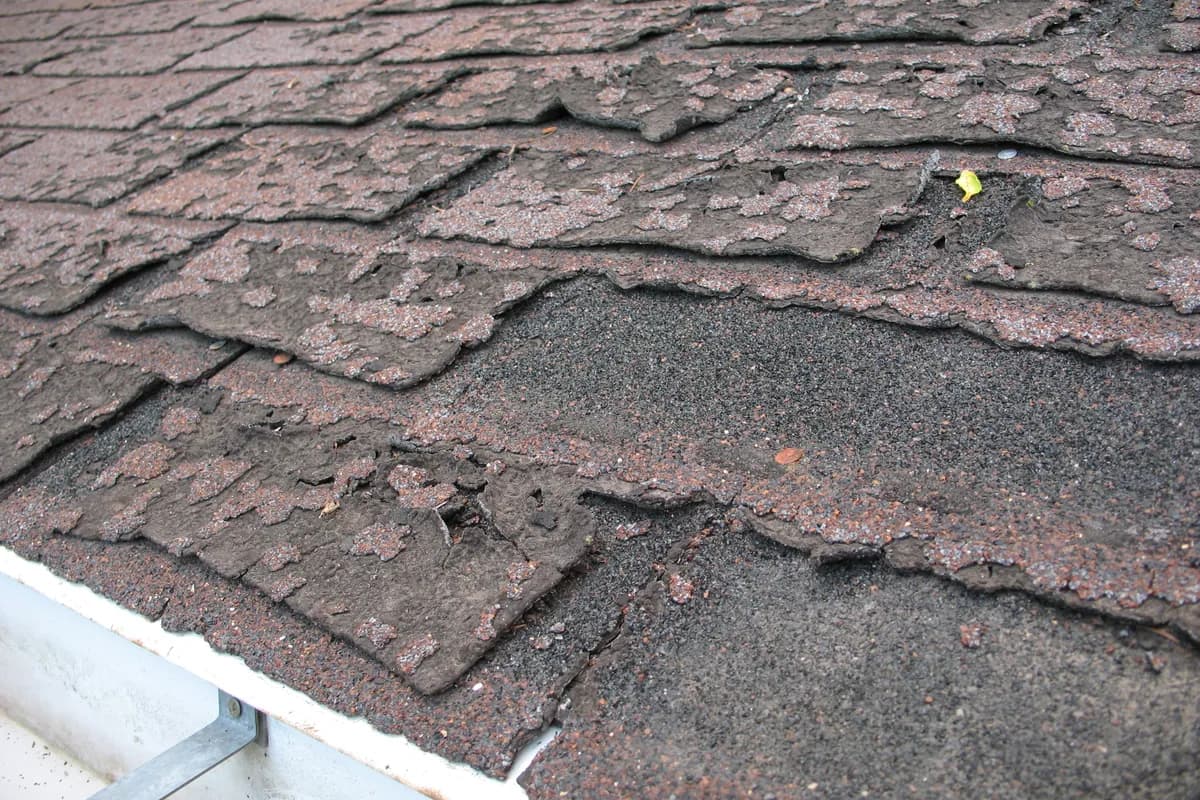
Algae streaking is largely cosmetic. Moss is not. Moss grows thick, holds a great deal of water, and — crucially — grows into and under the bottom edge of shingles, physically lifting them.
A lifted shingle edge is an open door in wind-driven rain. It also freezes: water held in the moss expands when it freezes, working the shingle edge further up. Where moss has established on a shaded, slow-drying slope, it is worth dealing with rather than ignoring.
Abrasion from branches
Branches that touch a roof do not need to fall to cause damage. A limb resting on or sweeping across a slope grinds granules off every time the wind moves it, and it does so in a consistent arc. Over a few seasons that leaves a worn stripe where the UV protection has gone.
Overhanging branches that do not touch still deliver a constant supply of debris, and they keep the slope shaded and damp. Where it can be done safely and without harming the tree, clearing branches back from the roof is one of the more effective things a wooded property can do.
What actually helps
Clearing the roof surface, not only the gutters, is the main thing — particularly valleys and the areas behind chimneys and against walls where debris collects and stays.
It should be done gently. Pressure washing an asphalt roof strips granules and takes years off it; so does aggressive scraping. Soft removal and letting the roof dry does more good than anything abrasive.
- Clear valleys and behind chimneys, not just the gutters
- Check after autumn leaf fall has properly finished, not during it
- Deal with moss where it has established, before it lifts shingle edges
- Cut back branches that touch or overhang the roof, where it is safe to do so
- Never pressure wash an asphalt shingle roof
Want someone to look at your roof?
Related services: Gutter Services, Roof Inspection, Roof Repair