Storm Damage Roof Repair in Burlington County, New Jersey
Storm damage is rarely as obvious as a missing section of roof. Far more often it is a row of shingles whose seal has been broken by uplift, a lifted piece of flashing that settled back down looking normal, or a scattering of impact bruises that will not show as leaks for a year or two.
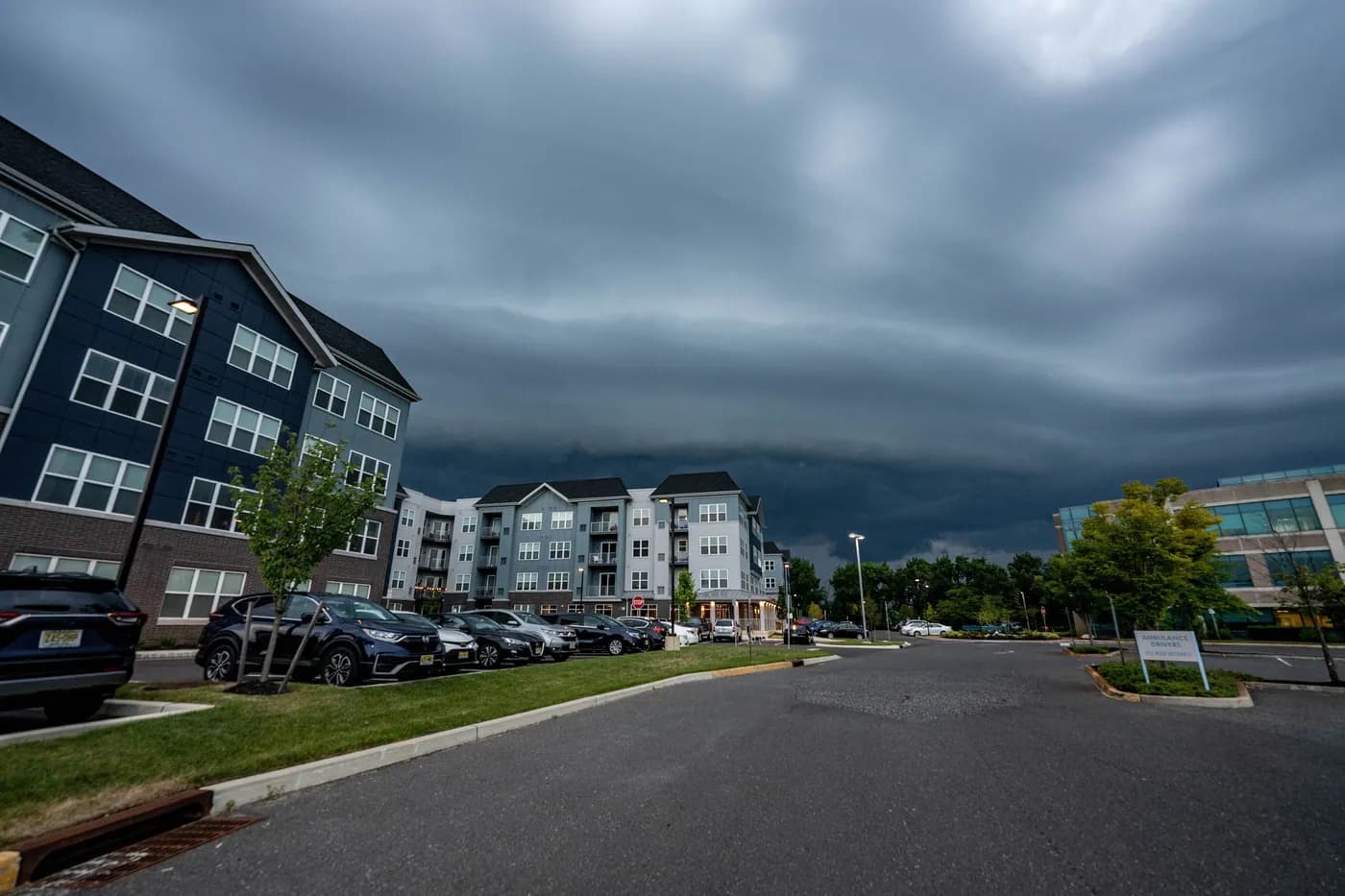
South Jersey gets its damaging weather from several directions: summer thunderstorms with straight-line gusts and very heavy short-duration rainfall, autumn coastal systems that push wind-driven rain onto the county for hours at a time, and the occasional heavier winter event. The damage from each looks different on a roof.
The point of a post-storm assessment is to find what has actually changed — and, equally, to tell you when nothing has, rather than manufacturing a repair.

Photo: Kerry Raymond / CC BY 4.0, via Wikimedia Commons
Signs
When storm damage roof repair is the right call
- Shingles missing, lifted, creased or displaced after a storm
- Shingle debris or granules in gutters, on the drive or in beds
- A new leak that appeared in the days following bad weather
- Dents or bruising on soft metal — vents, flashing, gutters
- Damaged or dislodged ridge cap
- Branches, limbs or other debris that struck the roof
Wind damage and the broken seal
Asphalt shingles are bonded to the course below by a strip of factory adhesive. Once wind breaks that bond, the shingle looks intact but is no longer sealed, and it will lift again in the next moderate wind and let water underneath.
This is why a roof can look fine from the ground after a storm and still be compromised. Creasing — a horizontal line across a tab where it folded back and returned — is the visible sign, and it is a legitimate finding even when nothing is missing. Damage concentrates along rakes, ridges, eaves and the windward slope, where uplift pressure is highest.
Wind-driven rain
Rain driven horizontally behaves nothing like rain that falls vertically. It gets under laps, behind flashing legs, past ridge vent baffles and into wall junctions that shed a normal downpour without difficulty.
It explains a leak pattern that puzzles a lot of owners: a roof that has never leaked in years of ordinary rain suddenly does so during one storm, then stops again. That is usually a detail that relies on gravity rather than a genuine seal, and it should be corrected rather than waited out — the next storm from the same direction will do the same thing.
Hail
Hail damage on asphalt shingles shows as bruising: a soft spot where the impact has fractured the mat beneath the granules, often with granules displaced around it. It frequently does not leak at first. What it does is remove the protective granule layer at that point, so the asphalt below is exposed to UV and weathers far faster.
Because the roof itself can hide the evidence, softer metal is a better witness. Dents in vent caps, gutters, downspouts, flashing and other soft surfaces indicate stone size and impact energy, which in turn indicates whether the shingles are likely to have been affected.
Falling limbs and debris
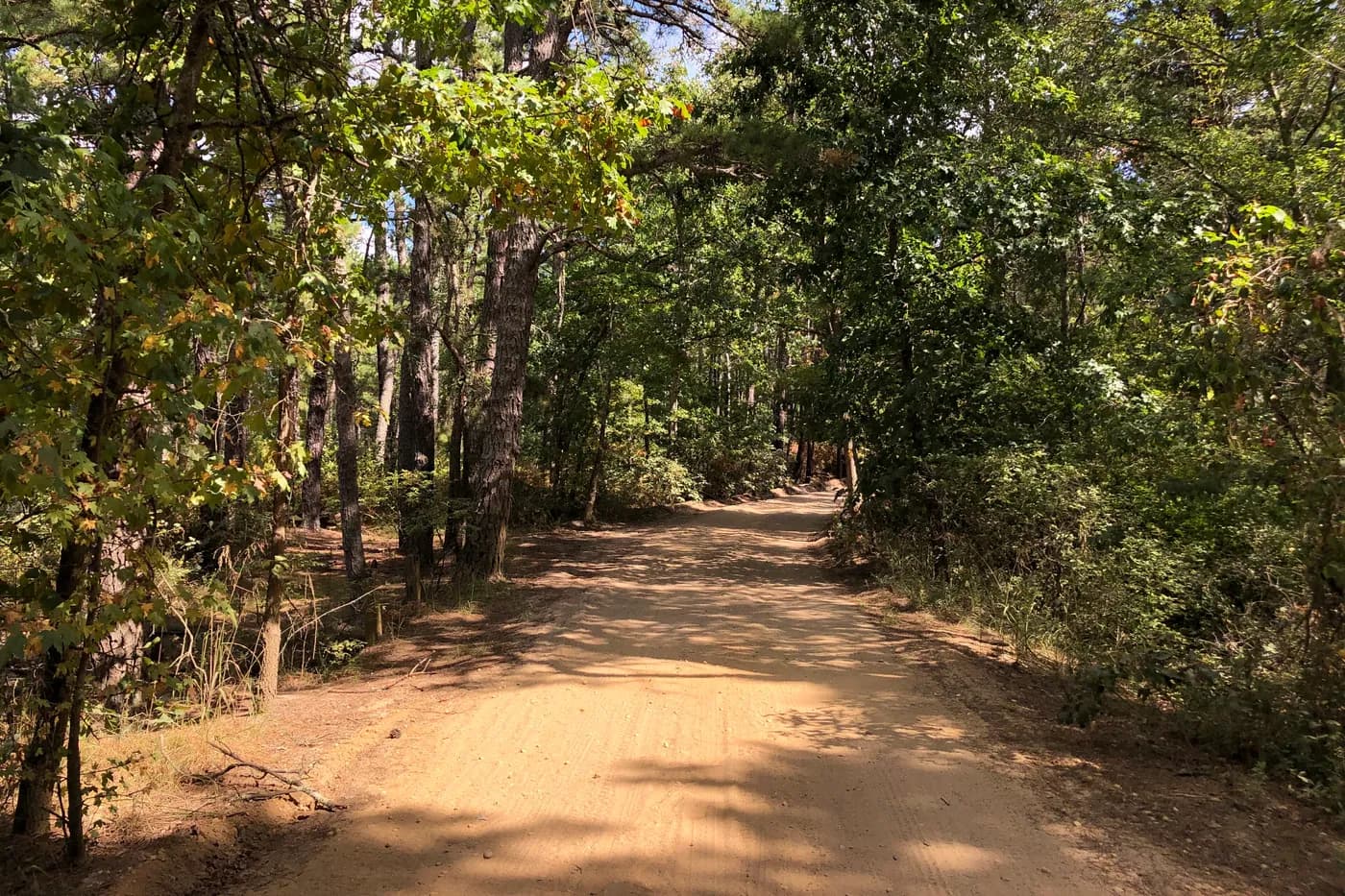
Across the wooded eastern and southern townships of the county, and on the mature tree-lined streets of the older river boroughs, falling limbs are one of the most common forms of storm damage. A strike can break through shingles and decking outright, or — more often — crack the mat without penetrating, leaving a weakened area that fails months later.
Debris that lands and stays is a separate problem: a limb bridging a valley or lying against a chimney holds moisture, blocks drainage and abrades the surface every time the wind moves it.
Documentation and insurance
If a claim is likely, what matters is a clear, dated record of the condition: photographs of each affected area, a written description of what was found and where, and a note of the weather event it relates to.
It is worth being straightforward about the limits here. Whether a claim succeeds is a matter between you and your insurer, and this page makes no promise about that outcome. What a good assessment provides is an accurate account of the damage — including the conclusion that a roof is undamaged, when that is what the roof shows.
Process
How the work is approached
- 01
Note the event
When the weather occurred and what you observed — wind direction, hail, debris, the timing of any new leak.
- 02
Ground and perimeter check
Shingle debris, granule accumulation, dented soft metal and displaced material around the property.
- 03
Roof assessment
Slope by slope, looking for broken seals, creasing, bruising, displaced ridge cap and flashing movement.
- 04
Interior check
Attic and ceilings for the moisture that a compromised roof may already have admitted.
- 05
Document
Photographs and a written record of each finding, dated and located.
- 06
Repair what is damaged
Including re-sealing compromised areas, not only replacing what is visibly missing.
Questions
Storm Damage Roof Repair: common questions
My roof looks fine from the ground after the storm. Is it?
Possibly, but ground level cannot show a broken seal, and that is the most common form of wind damage. A shingle whose adhesive bond has released sits flat and looks normal until the next windy day. Creasing and lifted tabs are only visible close up.
How soon after a storm should the roof be checked?
Reasonably soon, for two reasons. Damage that has not yet leaked is much cheaper to fix than damage that has been letting water into the decking for a season, and the link between the weather event and the damage is clearer while it is recent.
Does hail damage always cause a leak?
No, and that is what makes it deceptive. Hail typically fractures the shingle mat and knocks granules loose without creating an immediate hole. The roof carries on working while the exposed asphalt weathers much faster than it should.
Will you help with an insurance claim?
The useful contribution is accurate documentation — dated photographs and a clear written record of what was found and where. Whether a claim is accepted is between you and your insurer, and no promise is made here about that outcome.
A branch hit my roof but I cannot see any damage. Should I still have it looked at?
Yes. An impact can crack the shingle mat and the decking beneath without breaking the surface, which leaves a weakened area that fails later, well after anyone connects it to the storm.
What if the assessment finds no damage?
Then that is the finding, and it is a useful one — it gives you a dated record of the roof's condition. An assessment that produces a repair every time is not an assessment.
Where this comes up
Storm Damage Roof Repair around Burlington County

Related
Related services and reading
6 min read
When Should You Inspect a Roof After a Windstorm?
The most common form of wind damage leaves the roof looking completely normal from the ground. Here is how to tell whether yours needs attention.
6 min read
What Tree Debris Can Do to an Asphalt Shingle Roof
Debris on a roof is treated as untidiness. It is closer to a slow chemical and mechanical attack on the covering underneath it.
7 min read
What to Know About Roofing on Wooded Properties
A wooded lot does not just mean more leaves in the gutter. It changes how the roof ages, how it is maintained and how the work gets done.
Ask about storm damage roof repair
Tell us what is happening and we will get back to you about it. Fields marked * are required; everything else is optional.