When Should You Inspect a Roof After a Windstorm?
Published · Updated · 6 min read
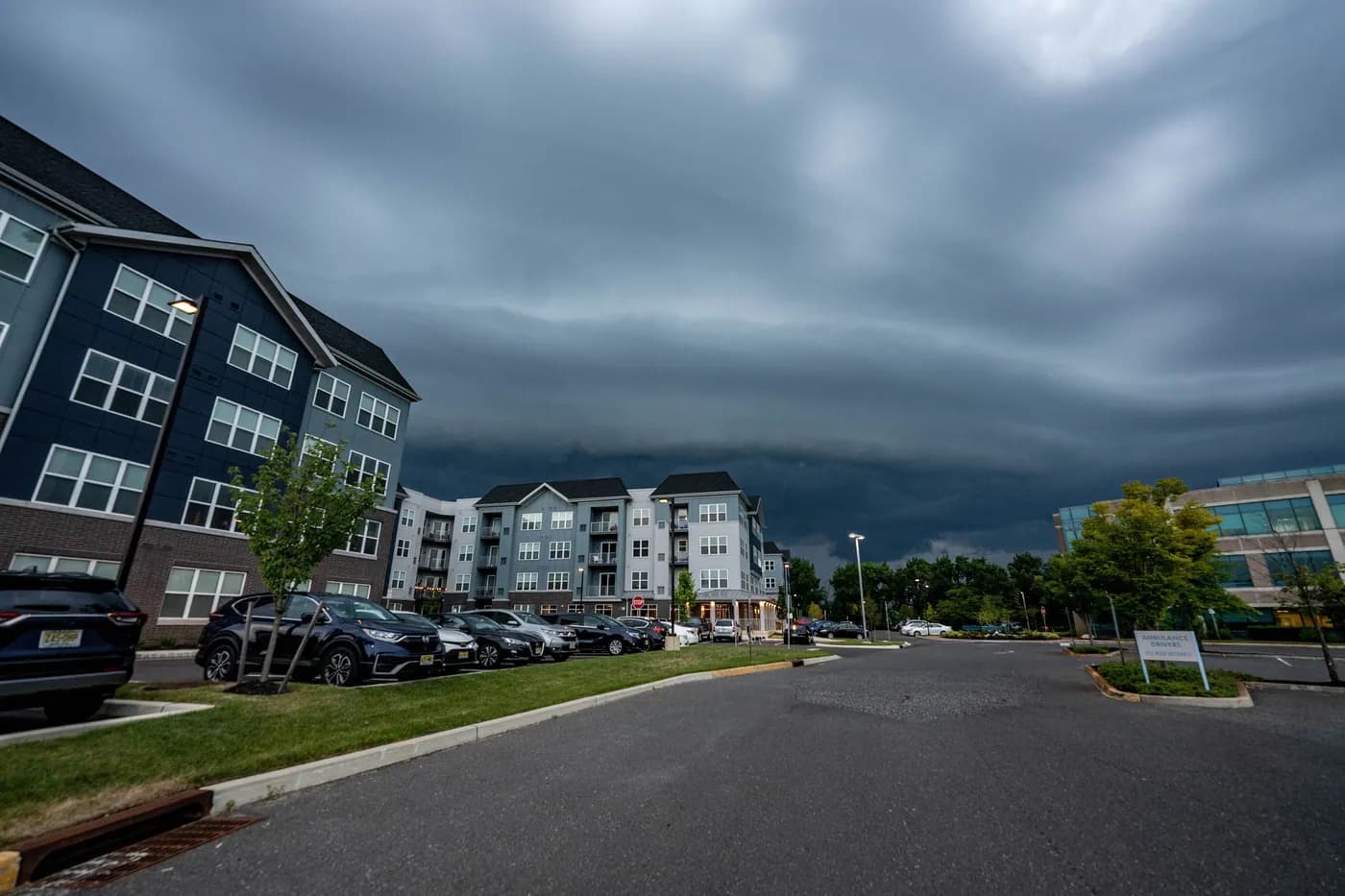
Photo: Anthony Quintano from Mount Laurel, United States / CC BY 2.0, via Wikimedia Commons
South Jersey gets its damaging wind from a few distinct sources: fast-moving summer thunderstorms with straight-line gusts, autumn coastal systems that push sustained wind and horizontal rain across the region for hours, and the occasional winter event. They damage roofs differently.
The awkward part is that the most common outcome — a broken shingle seal — is invisible from ground level. The roof looks exactly as it did the day before, and the consequence arrives during the next storm rather than this one.
What wind actually does to a shingle
Asphalt shingles are held down twice: by nails, and by a strip of factory adhesive that bonds each shingle to the one below it. In a wind event, uplift pressure tries to peel the shingle upward from its bottom edge.
When that pressure exceeds the adhesive bond, the seal releases. The shingle usually falls back into place looking undisturbed, but it is no longer sealed — it is a flap held only by its nails. The next moderate wind lifts it again, and now rain can get underneath.
The threshold worth acting on
There is no single wind speed at which roofs start failing, because it depends on the age of the shingles, how well they sealed originally, the exposure of the slope and the shape of the building.
As a practical rule: if a storm brought down small branches across the neighbourhood, took bins over, or made you notice the noise, it is worth a look. Age matters too — an older roof whose seals have already weakened will release at wind speeds a newer one shrugs off entirely.
What you can check safely from the ground
A great deal is visible with binoculars from the garden, and none of it requires a ladder. Walk the whole perimeter rather than only the front elevation, because damage concentrates on the windward side.
Look particularly at the edges — the rakes, the eaves and the ridge — because that is where uplift is strongest and where failure starts.
- Shingles obviously missing, lifted or sitting out of line
- Horizontal creases across a shingle where it folded back and returned
- Ridge cap displaced, lifted or gone
- Shingle fragments, or granule accumulation, in the garden or the drive
- Dented or displaced soft metal: vent caps, gutters, flashing
- Debris that has landed and stayed on the roof
Then check inside
The attic is worth ten minutes after any significant storm. Daylight where there should not be any, fresh damp patches on the sheathing, or wet insulation are all findings you want before the next rainfall rather than after it.
Ceilings deserve a look too, but remember that water takes time to travel. A stain that appears three days after a storm is still storm damage.
When it is worth getting someone up there
Creasing and broken seals genuinely cannot be assessed from the ground. If the storm was significant, if the roof is more than ten or twelve years old, or if you find anything on the list above, close inspection is the only way to know.
It is also worth doing while the event is recent. The connection between a specific storm and specific damage is much easier to establish soon afterwards, which matters if an insurance claim is involved.
What not to do
Do not go onto the roof yourself after a storm. Wet shingles are exceptionally slippery, storm-loosened material moves underfoot, and decking weakened by a limb strike can give way without warning.
Be cautious, too, about contractors who appear unsolicited immediately after a storm and want a signature on the doorstep. Take your time, get the damage documented independently, and do not agree to work under pressure.
Want someone to look at your roof?
Related services: Storm Damage Roof Repair, Emergency Roof Repair, Roof Inspection