Roof Inspection in Burlington County, New Jersey
An inspection answers three questions: what condition is this roof in, what needs attention now, and roughly how much life is left in it. Everything else — whether to repair, whether to replace, whether to do nothing for another three years — follows from those answers.
It is deliberately the first step rather than the last. A recommendation made without looking at the roof properly is a guess, and a quote produced without knowing whether the decking is sound is a number that will move.
The most valuable possible outcome of an inspection is finding that the roof is fine. That is a real result, and it is worth having in writing.
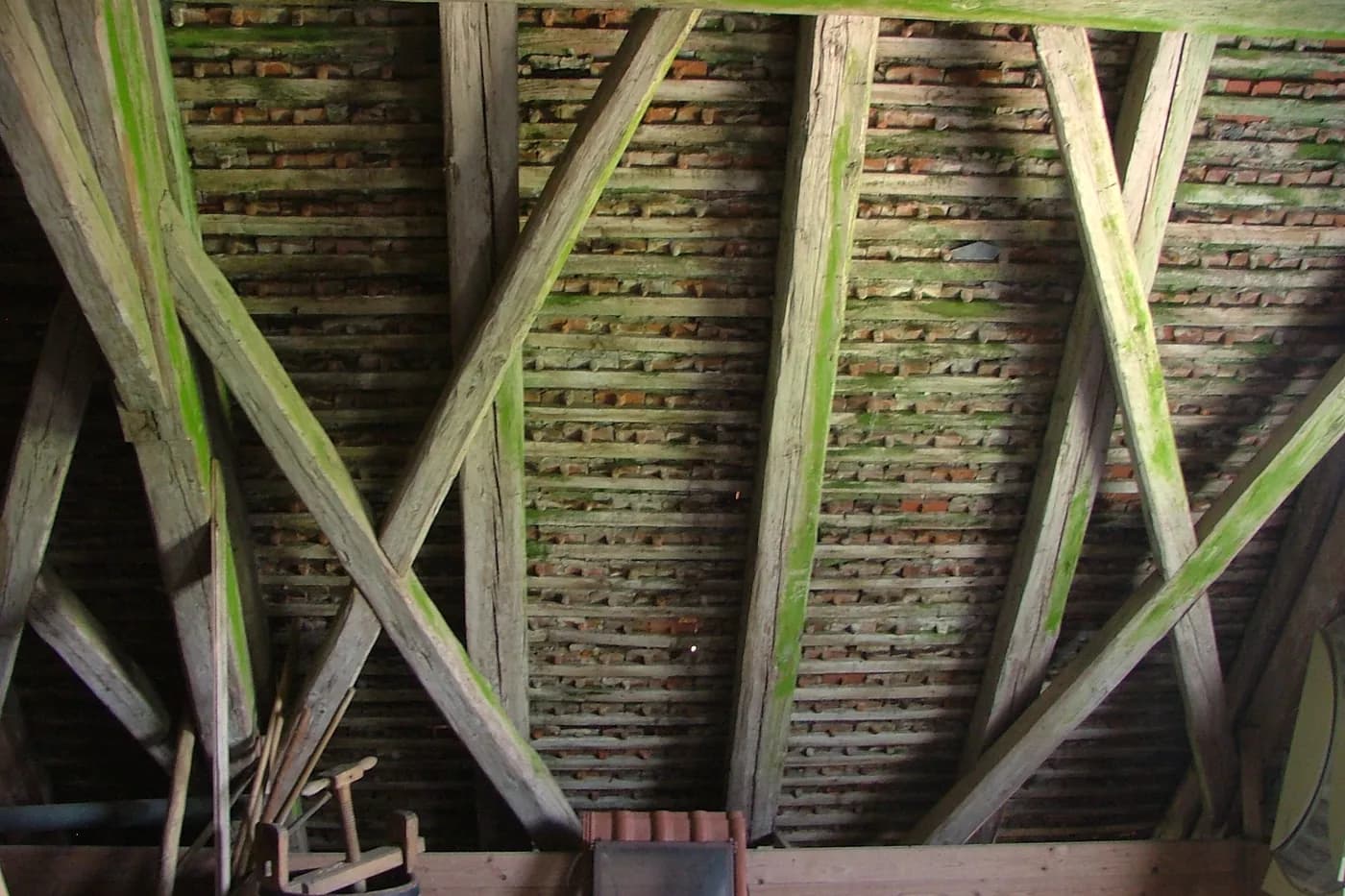
Photo: Karl and Ali / CC BY-SA 2.0, via Wikimedia Commons
Signs
When roof inspection is the right call
- Buying or selling a property with a roof of unknown age
- After a storm, whether or not anything obvious has happened
- A leak that has been repaired before and has come back
- A roof that is fifteen years old or more with no recent assessment
- Before committing to a large repair, to confirm it is the right call
- Recurring damp, condensation or musty smells in an attic
The covering
The field of the roof is assessed slope by slope, because slopes age at different rates. A south-facing slope takes far more UV; a north-facing one under trees stays damp and grows algae; the windward slope takes the uplift.
What matters is granule coverage, the flexibility of the shingle, whether seals are intact, and whether deterioration is local or general. Local means repair. General means the roof is approaching the end of its life, and that changes the whole conversation.
- Granule loss and any bare asphalt showing through
- Curling, cupping, cracking and brittleness
- Seal integrity, and tabs that lift by hand
- Damage confined to one area versus spread across every slope
Flashing, valleys and penetrations
This is where most roofs leak, so it is where most of the inspection time goes. Every junction gets looked at: sidewall and headwall flashing, chimney base and counter-flashing, skylight curbs, and the condition of any valley.
Penetrations get individual attention because they fail individually. A plumbing vent boot with a split collar is a leak waiting for the next rain, and it is both one of the most common findings and one of the cheapest things to put right before it becomes interior damage.
- Step and counter-flashing at walls, chimneys and dormers
- Chimney condition, including crown and mortar where visible
- Skylight curb and head flashing
- Valley wear, debris and the type of valley construction
- Every vent boot, exhaust termination and equipment mount
Edges, eaves and drainage
The roof edge is where the covering, the drip edge, the gutter and the fascia all meet, and it is where water most often goes wrong without anybody noticing. Missing drip edge lets run-off track behind the gutter and into the fascia, which shows up as rotten board long before it shows as an interior leak.
Gutters are inspected as part of the roof rather than as an accessory, because a gutter that overflows puts water back onto the roof edge and down the wall.
Ventilation and the attic side
Where the attic is accessible, it is worth more than the roof surface. It shows moisture that has already got in, sheathing that has darkened or delaminated, insulation that has been wet, daylight where there should not be any, and whether the ventilation path is real or theoretical.
The single most common finding is exhaust without intake — ridge vents installed over soffits that are blocked, painted shut or buried under insulation. The roof looks correct from outside and cannot ventilate at all.
- Intake at the soffits: present, clear, and not insulated over
- Exhaust near the ridge, and whether types have been mixed
- Staining, delamination or soft spots on the underside of the deck
- Bathroom and kitchen fans that discharge into the attic rather than outdoors
- Compressed or displaced insulation, and any evidence of past wetting
What you get at the end
A useful inspection produces a written record: what was found, where it was found, photographs, and a clear division between what needs attention now, what should be watched, and what is fine.
It should also include a plain assessment of remaining service life, with the reasoning behind it. Not a prediction to the year — no one can do that honestly — but a realistic bracket that lets you plan rather than react.
Process
How the work is approached
- 01
Understand the history
Age of the covering, previous repairs, known leaks and any recent weather events.
- 02
Assess the exterior
Ground and perimeter first, then the roof surface slope by slope where it can be accessed safely.
- 03
Examine every junction
Flashing, valleys, chimneys, skylights and each penetration individually.
- 04
Check drainage
Gutters, downspouts, drip edge and where water actually leaves the property.
- 05
Inspect the attic where accessible
The side of the roof that shows what has already happened.
- 06
Report in writing
Findings, photographs, priorities and a realistic view of remaining life.
Questions
Roof Inspection: common questions
What does a roof inspection actually cover?
The covering on every slope, all flashing and junctions, valleys, every penetration, the roof edge and drainage, and — where it can be accessed — the attic side. The attic often tells you more than the roof surface, because it shows what water has already done.
How often should a roof be inspected?
Annually is a reasonable rhythm for most properties, plus after any significant storm, plus before buying or selling. Roofs under heavy tree cover benefit from being looked at more often, because debris accumulates continuously rather than seasonally.
Is an inspection worth it if there is no leak?
That is the best time for one. Problems found before they leak are small, cheap and confined to the roof. Problems found after they leak have usually involved the decking, the insulation and a ceiling.
Does an inspection mean I will be sold a new roof?
It should not. A worthwhile inspection regularly concludes that a roof needs nothing, or needs one small repair. If every inspection produces a replacement recommendation, it is not really an inspection.
Can a roof be inspected without walking on it?
Some of it, yes — the perimeter, the ground evidence, the attic side and a great deal from a ladder at the eaves. But some findings, particularly seal condition and shingle flexibility, genuinely need close access. Where a roof cannot be walked safely, that limitation should be stated rather than glossed over.
Do I get something in writing?
You should: findings, locations, photographs, and a clear split between what is urgent, what is worth monitoring, and what is fine. A verbal summary is not much use six months later when you are planning a budget.
Where this comes up
Roof Inspection around Burlington County

Related
Related services and reading
7 min read
What Happens During a Professional Roof Inspection
A good inspection is mostly spent at the junctions. The middle of the roof is rarely where the trouble is.
6 min read
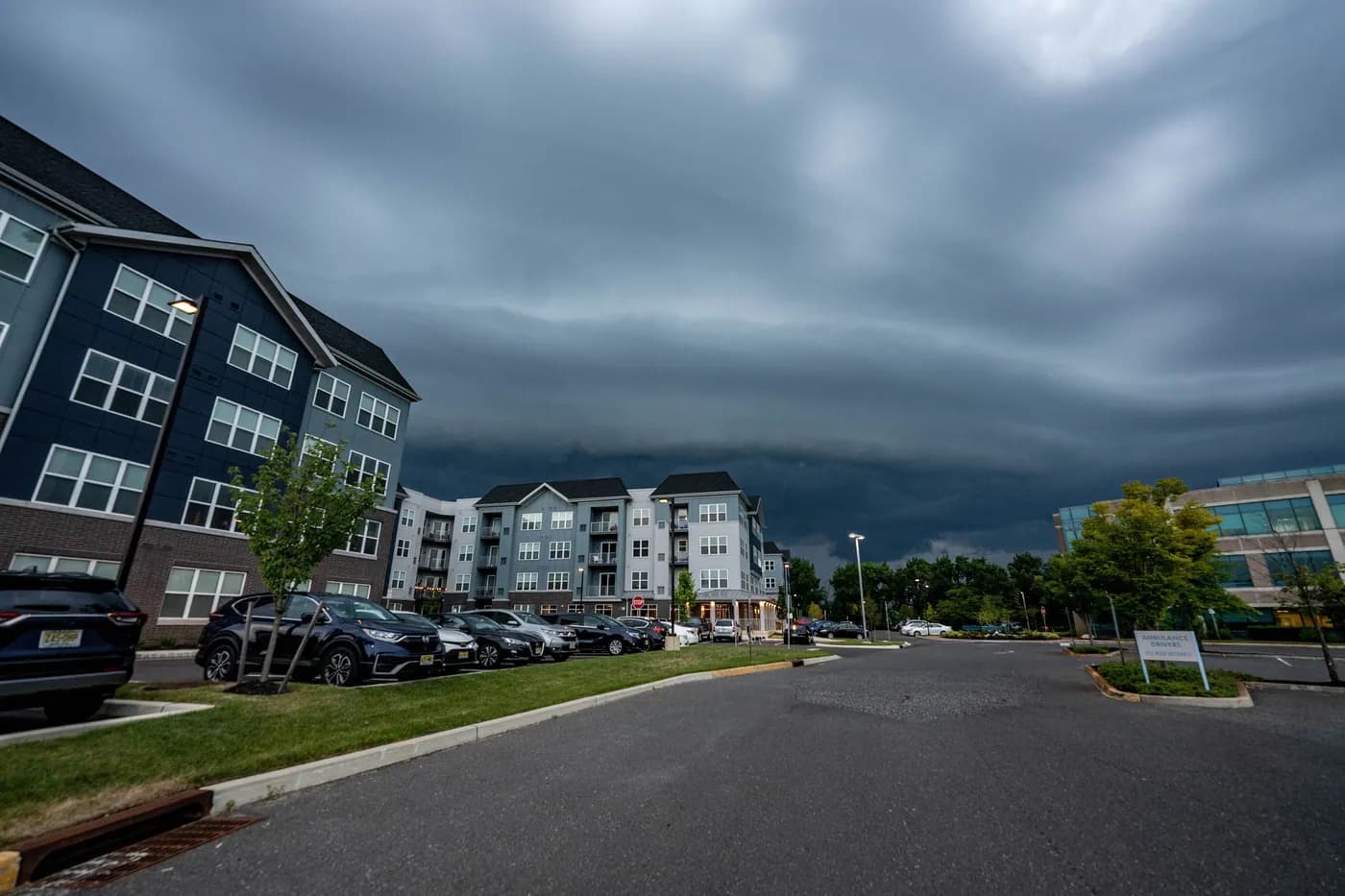
When Should You Inspect a Roof After a Windstorm?
The most common form of wind damage leaves the roof looking completely normal from the ground. Here is how to tell whether yours needs attention.
7 min read
Roof Leak Warning Signs Homeowners Miss
By the time water drips from a ceiling, it has usually been getting in for months. The earlier signals are quieter, and most of them are not wet.
Ask about roof inspection
Tell us what is happening and we will get back to you about it. Fields marked * are required; everything else is optional.