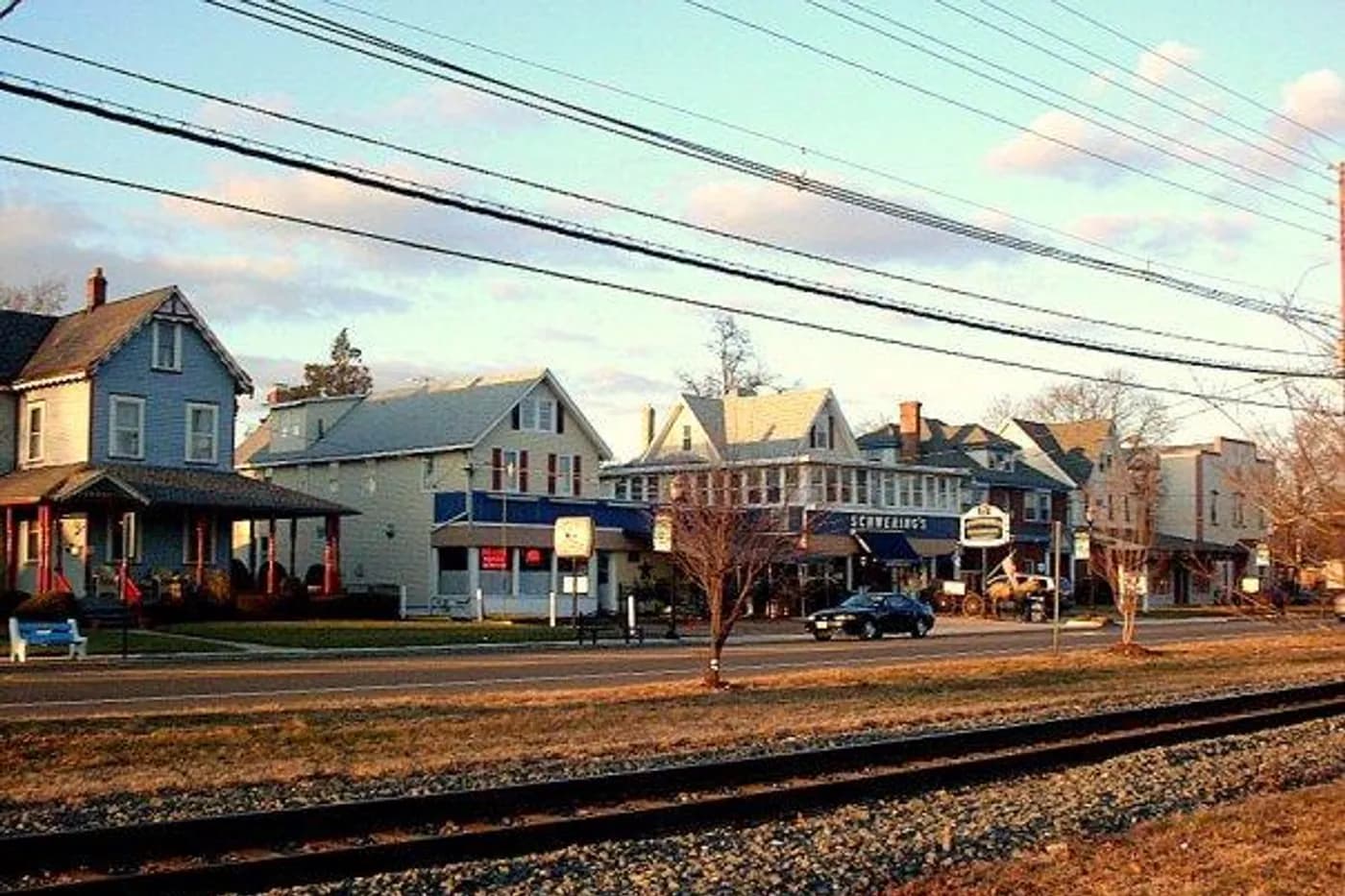
Palmyra Borough · Burlington County
Roofing Contractors in Palmyra, NJ
Roof repair, replacement and inspection for Palmyra's older housing along the Delaware.
Photo: Wmflanagan / CC0, via Wikimedia Commons
On the Delaware
Palmyra: the place and its buildings
Palmyra was laid out in 1850 on a grid deliberately echoing Center City Philadelphia — Market, Arch, Race and Vine, with Front Street along the water and numbered streets running back from it. The Tacony-Palmyra Bridge has connected it directly to Philadelphia since 1929.
The result is a compact, walkable borough of older housing on regular streets, close to open water. The roofs reflect it: modest scale, moderate to steep pitches, decades of accumulated repair, and real exposure to weather coming off the Delaware.
Housing is mostly older and closely set: late nineteenth and early twentieth century detached, semi-detached and attached homes on the grid, with mid-century infill behind. Porches are near-universal and their roofs are frequently at low slope. Masonry chimneys, plank sheathing and multiple existing coverings are all common.
Leaks and flashing
Where older roofs here let water in
- Repeated leaks on shingled low-slope porch roofs
- Leaks at the party wall junction on attached properties
- Broken shingle seals on river-facing elevations
- Water saturating ground against masonry in narrow side passages
- Chimney flashing failing under applied roofing cement
Services
Roofing services in Palmyra
Flat Roofing
Low-slope membrane roofing on additions, porches, dormers and commercial buildings.
Roof Repair
Leak tracing and targeted repairs for shingle, flat and tile roofs across Burlington County.
Roof Replacement
Full tear-off and rebuild of the roof system, from decking and underlayment through to ridge ventilation.
Gutter Services
Gutters, downspouts and roof-edge drainage — the part of the roof system that moves water away.
Roof replacement
Replacing a roof on an older building
On older housing a tear-off usually reveals more than one previous covering and often plank sheathing rather than plywood. A quotation should state its decking allowance, and chimney and wall flashing should be rebuilt rather than reused.
What a replacement includesExposure
Wind and weather
The riverfront edge takes wind and driven rain straight off the Delaware, while the streets further back are progressively more sheltered. Autumn coastal systems are the events that find the faults, and they typically show up first on the north-west elevations facing the water.
Drainage
Roof edges, gutters and where water goes
With houses close together and often attached, roof water frequently discharges into narrow side passages where it saturates ground against masonry. Porch roofs compound this by discharging their own drainage separately, often straight onto the ground beside the front wall. Taking the water genuinely away from the building is worth as much here as work on the covering itself.
Street trees
Canopy and debris
The older residential grid carries a mature street canopy that puts leaf debris into gutters across a long season. On closely built streets with shallow eaves, a gutter that fills has very little margin before it starts backing water onto the roof edge.
Older-property considerations
What changes the approach here
- Near-universal porch roofs at slopes too shallow for shingles
- Attached and semi-detached properties with party wall junctions
- Open river exposure at the western end of the grid
- Older roofs with several coverings and unknown deck condition
- Masonry chimney flashing that has been sealed rather than rebuilt
- Restricted access and staging on tightly built streets
Questions
Roofing questions from Palmyra
Almost every house here has a porch roof that leaks. Why?
Because most of them are shallower than shingles can handle. A porch roof built at a low slope needs a continuous membrane, not a lapped covering — below a certain pitch water moves too slowly to clear the laps and works back underneath regardless of how well the front edge is sealed.
Does the bridge traffic or the river affect the roofs here?
The river does, in the ordinary way: the western end of the borough takes wind and driven rain off open water with nothing to break it, so shingle seals fail sooner on those elevations. The bridge itself makes no difference to a roof.
My house is a twin. How does that change a roof replacement?
The roof plane often continues across the party wall, so where new work meets the neighbour's existing covering has to be detailed deliberately rather than simply cut. Access and staging are tighter too. It is all manageable, but it is worth agreeing before work starts.
Where should porch roof drainage go?
Away from the front wall, which is not where most of it currently goes. A porch roof discharging straight onto the ground beside the masonry keeps that ground wet continuously, and on older houses that shows up as damp at the base of the wall. A downspout taken out to the street edge solves it cheaply.
Nearby
Service areas near Palmyra
Further reading
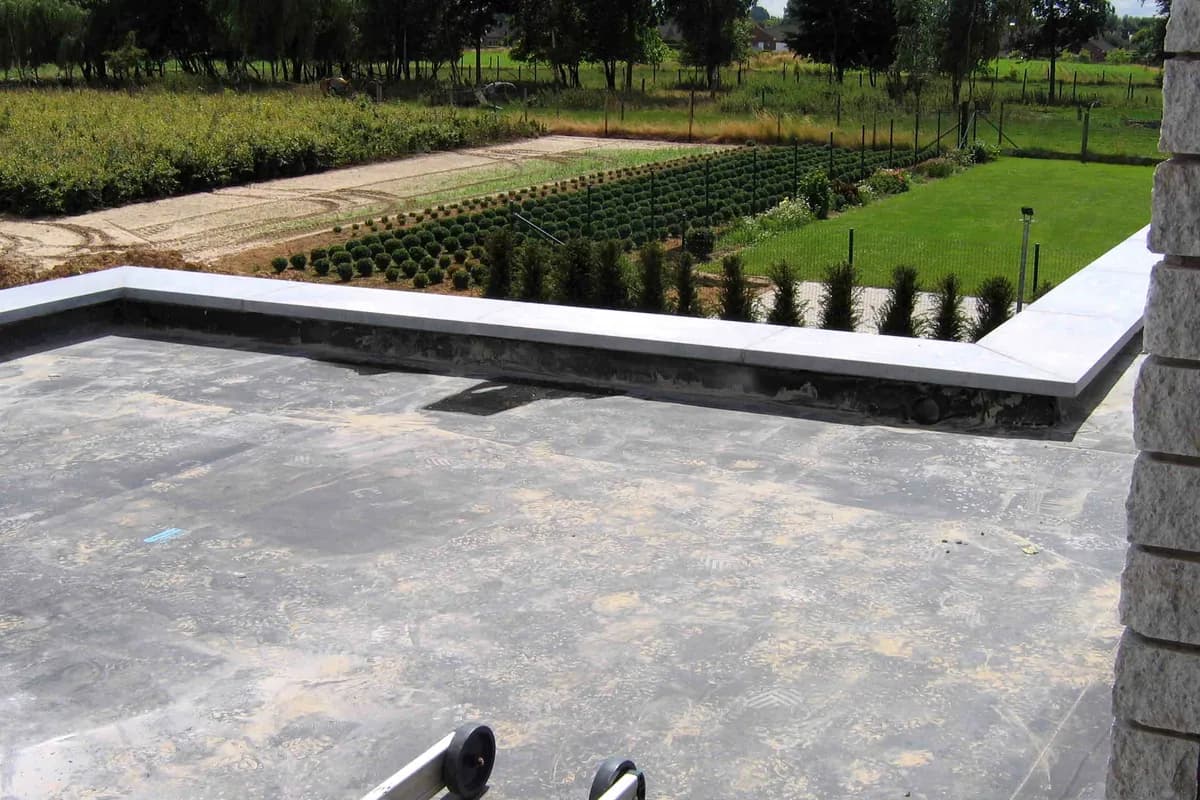
6 min read
Flat Roof Drainage Problems Explained
On a low-slope roof, almost every membrane problem is really a drainage problem that has been going on for a while.
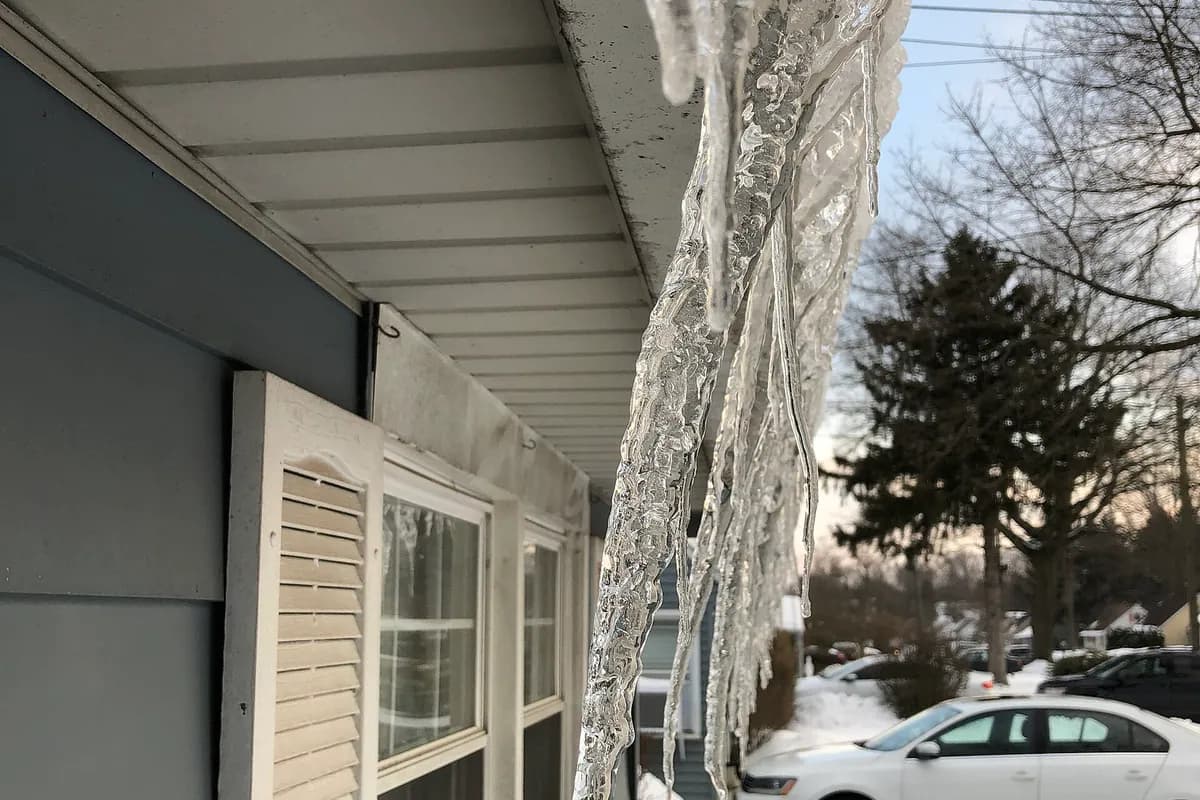
6 min read
How Gutter Drainage Affects the Roof Edge
The dangerous overflow is not the one you can see from the garden. It is the one going backwards, onto the roof.
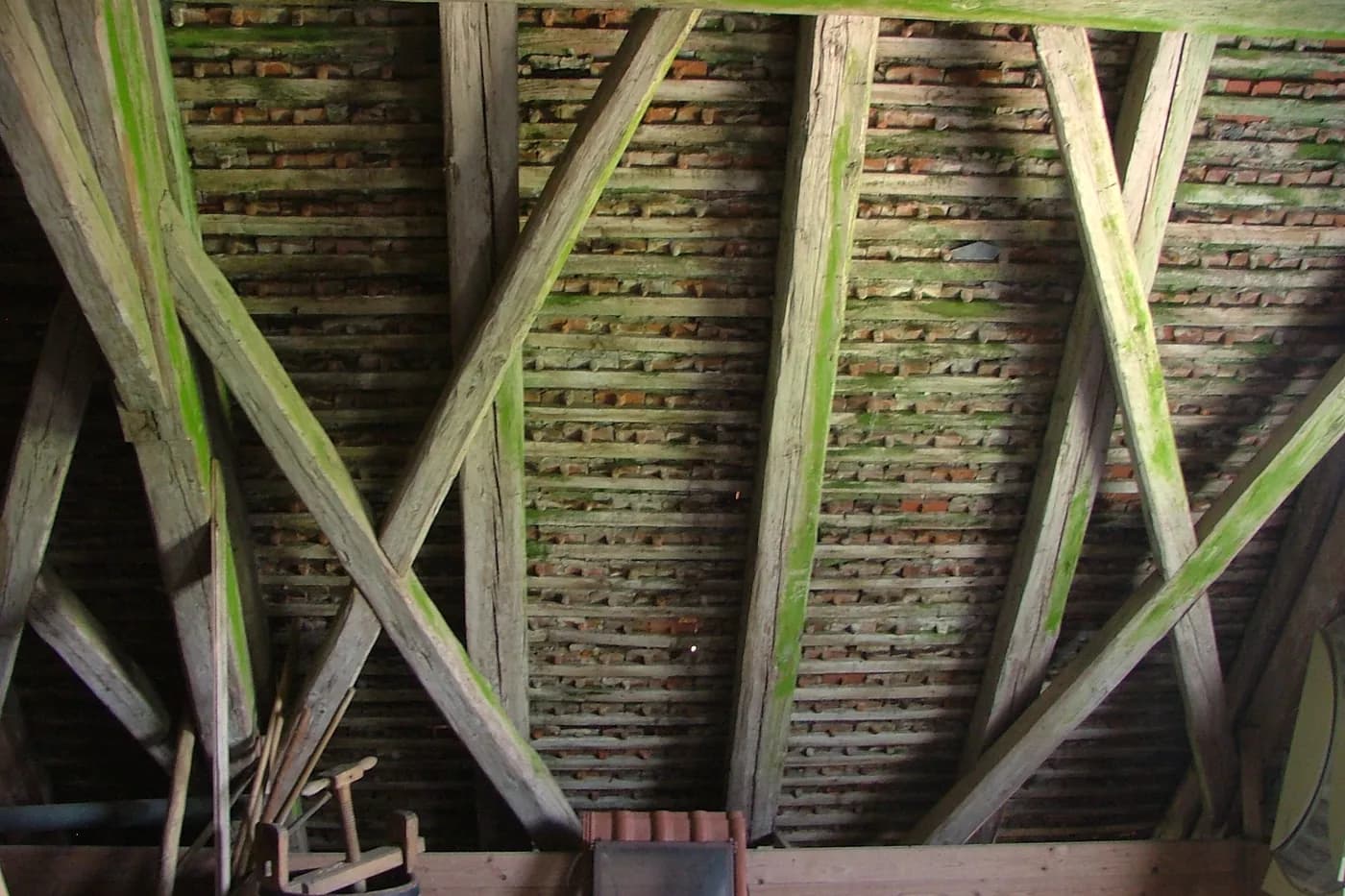
7 min read
Roof Leak Warning Signs Homeowners Miss
By the time water drips from a ceiling, it has usually been getting in for months. The earlier signals are quieter, and most of them are not wet.
Ask about a roof in Palmyra
Tell us about the roof. The municipality page you are on is recorded for context only — the property address you give is what we use.